Insights

Notes on supply, sourcing, and IC trading.

Practical observations from the front line of semiconductor distribution and excess inventory recirculation.

Qualcomm–Amazon Custom AI Silicon Program Links Inference Compute, 1.6T Optics and Cloud EDA

September 9, 2026 · By WingCore Editorial

Qualcomm–Amazon Custom AI Silicon Program Links Inference Compute, 1.6T Optics and Cloud EDA

The multi-generation Qualcomm–Amazon program combines custom inference silicon with optical connectivity up to 1.6T. It also extends to AWS-based EDA workflows, linking deployed infrastructure with chip development. The commercial supply effect remains milestone-dependent because no device, manufacturing plan or service date has been disclosed.

ai-demandprocurementsupply-chain
Read more →
Notebook CPU Availability Improves as Memory and Processor Costs Rise to 68% of System BOM

September 7, 2026 · By WingCore Editorial

Notebook CPU Availability Improves as Memory and Processor Costs Rise to 68% of System BOM

Notebook CPU availability has improved since the second quarter, reducing production disruption risk. However, CPU, DRAM and SSD now represent 68% of mainstream notebook BOM cost, compared with about 45% in early 2025. OEM and EMS exposure is shifting from allocation risk to the timing of inventory depletion and cost pass-through.

marketmemoryprocurementsupply-chain
Read more →
Samsung's HBM5 and zHBM Roadmap Moves AI Memory Competition From Peak Bandwidth to System-Level Deliverability

September 2, 2026 · By WingCore Editorial

Samsung's HBM5 and zHBM Roadmap Moves AI Memory Competition From Peak Bandwidth to System-Level Deliverability

Samsung's September 1 roadmap sets HBM5 at roughly twice HBM4E performance and positions zHBM for an eightfold step beyond HBM5. The commercial significance lies less in the peak figures than in the expanded qualification burden across bonding, packaging, thermal control and test. OEM and EMS planning should distinguish technical targets from certified, allocable output.

memoryai-demandprocurementsamsung
Read more →
The $250 Million Diodes–ElevATE Transaction Expands ATE Analog IC Exposure Without an Immediate Supply Reset

August 31, 2026 · By WingCore Editorial

The $250 Million Diodes–ElevATE Transaction Expands ATE Analog IC Exposure Without an Immediate Supply Reset

Diodes completed its acquisition of ElevATE Semiconductor for $250 million in cash. Management expects roughly $50 million of revenue contribution in the first twelve months and immediate accretion to revenue, gross margin and earnings per share. ElevATE will continue as a product line, making continuity the disclosed near-term operating model rather than product rationalization.

marketprocurementsupply-chain
Read more →
When Export Controls Reach the Installed Base: What the MATCH Act's Servicing Clause Means for OEM and EMS Sourcing of Mature-Node Components

August 26, 2026 · By WingCore Editorial

When Export Controls Reach the Installed Base: What the MATCH Act's Servicing Clause Means for OEM and EMS Sourcing of Mature-Node Components

The MATCH Act, now being pushed back toward the Senate NDAA, would ban DUV immersion and cryogenic etch exports to China and, more consequentially, bar ASML from servicing the tools already installed there. For OEM and EMS sourcing organizations, the relevant exposure is not leading-edge logic but the mature-node output that supplies general-purpose MCUs, analog, power discretes, NOR and DDR4. With domestic DUV output at roughly five systems in 2026 against 95 imported in 2025, substitution capacity does not exist inside the relevant planning horizon.

marketprocurementsupply-risksupply-chain
Read more →
When Repricing Becomes Category-Wide: What ST's Third 2026 Increase and 52-Week Power Lead Times Mean for OEM and EMS Sourcing

August 24, 2026 · By WingCore Editorial

When Repricing Becomes Category-Wide: What ST's Third 2026 Increase and 52-Week Power Lead Times Mean for OEM and EMS Sourcing

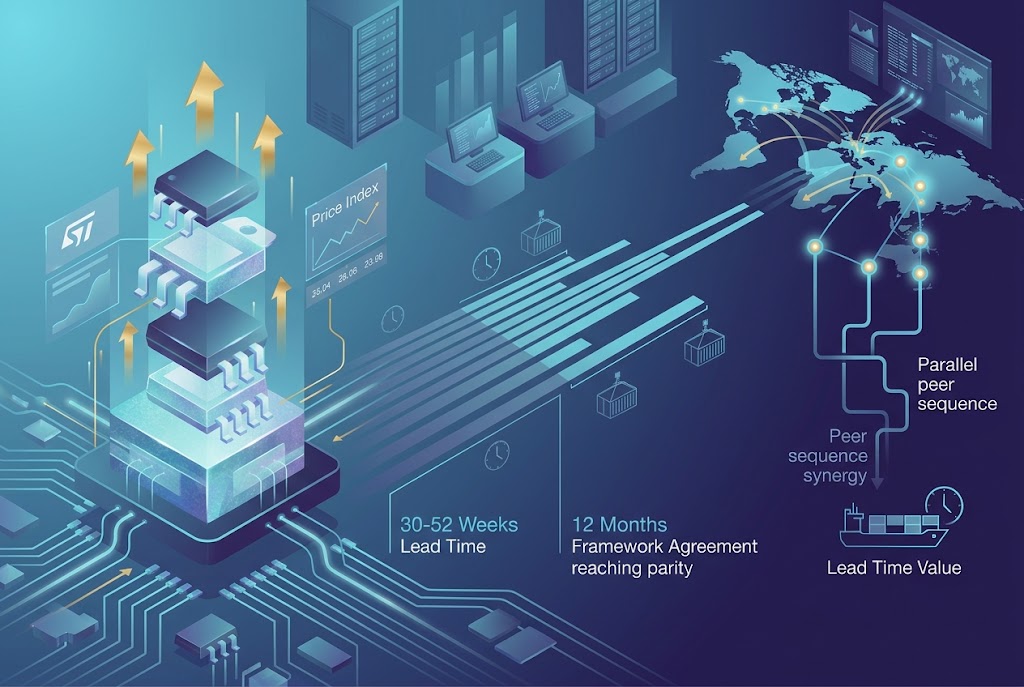
STMicroelectronics' third price increase of 2026 became effective on August 23, covering power ICs, general-purpose MCUs, NFC RF chips and power semiconductors, with automotive MCU pricing up a cumulative 15–20% and power device lead times running from 30 to 52 weeks. Read alongside comparable moves from TI, NXP, Infineon and onsemi, the event marks the point at which analog and power repricing stops being a supplier-specific negotiation and becomes a structural feature of the category. This analysis examines the cadence of the 2026 rounds, the way lead times and pricing reinforce one another, and the implications for OEM and EMS sourcing strategy through 2027.

marketprocurementindustrialsupply-risk
Read more →
When Heat Becomes the Binding Constraint: What Packaging Thermal Limits Mean for OEM and EMS Sourcing Through 2027

August 21, 2026 · By WingCore Editorial

When Heat Becomes the Binding Constraint: What Packaging Thermal Limits Mean for OEM and EMS Sourcing Through 2027

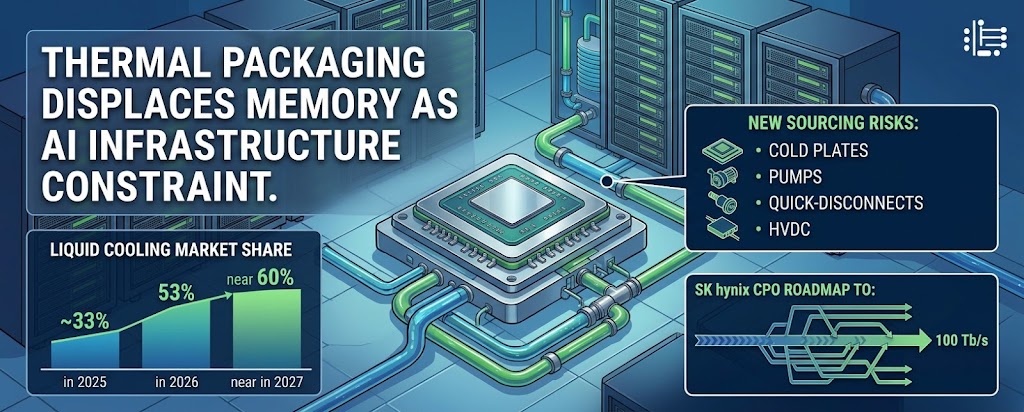
Packaging thermals have overtaken memory as the primary constraint on AI infrastructure expansion, according to researchers presenting this week. Individual AI processors now exceed 1kW TDP and rack systems draw hundreds of kilowatts, while liquid cooling penetration climbs from roughly 33% in 2025 to 53% in 2026 and near 60% in 2027. For OEM and EMS organisations, the shift relocates programme risk from semiconductor allocation into thermal and power-delivery hardware, categories that most sourcing structures were never built to track. The mitigation paths under discussion, CPO and STCO, are real but arrive on a timeline that leaves 2026 and 2027 schedules unchanged.

ai-demandsupply-chainmarketsupply-risk
Read more →
When the Price Cycle Becomes Booked Profit: What NAND's 77% Revenue Quarter Means for OEM and EMS Sourcing Strategy

August 19, 2026 · By WingCore Editorial

When the Price Cycle Becomes Booked Profit: What NAND's 77% Revenue Quarter Means for OEM and EMS Sourcing Strategy

TrendForce's Q2 2026 figures show combined revenue at the top five NAND Flash brands reaching US$68.87bn, a 77% quarter-on-quarter increase driven almost entirely by average selling prices rather than bit shipments. Micron advanced to third place on 99.2% growth and SK hynix Group recorded its highest-ever operating margin. For OEM and EMS organisations, the significance lies less in the headline figure than in what it demonstrates about supplier incentives for the remainder of the cycle. This piece examines why an ASP-led quarter forecloses the mean-reversion assumption embedded in most sourcing models, and how the arrival of YMTC's 8-plane QLC in volume changes — and does not change — the second-source calculus.

marketmemoryai-demandprocurement
Read more →
When Labor Risk Meets the Allocation Peak: What SK Hynix's Union Consolidation Signals for HBM and DDR5 Sourcing Strategy

August 17, 2026 · By WingCore Editorial

When Labor Risk Meets the Allocation Peak: What SK Hynix's Union Consolidation Signals for HBM and DDR5 Sourcing Strategy

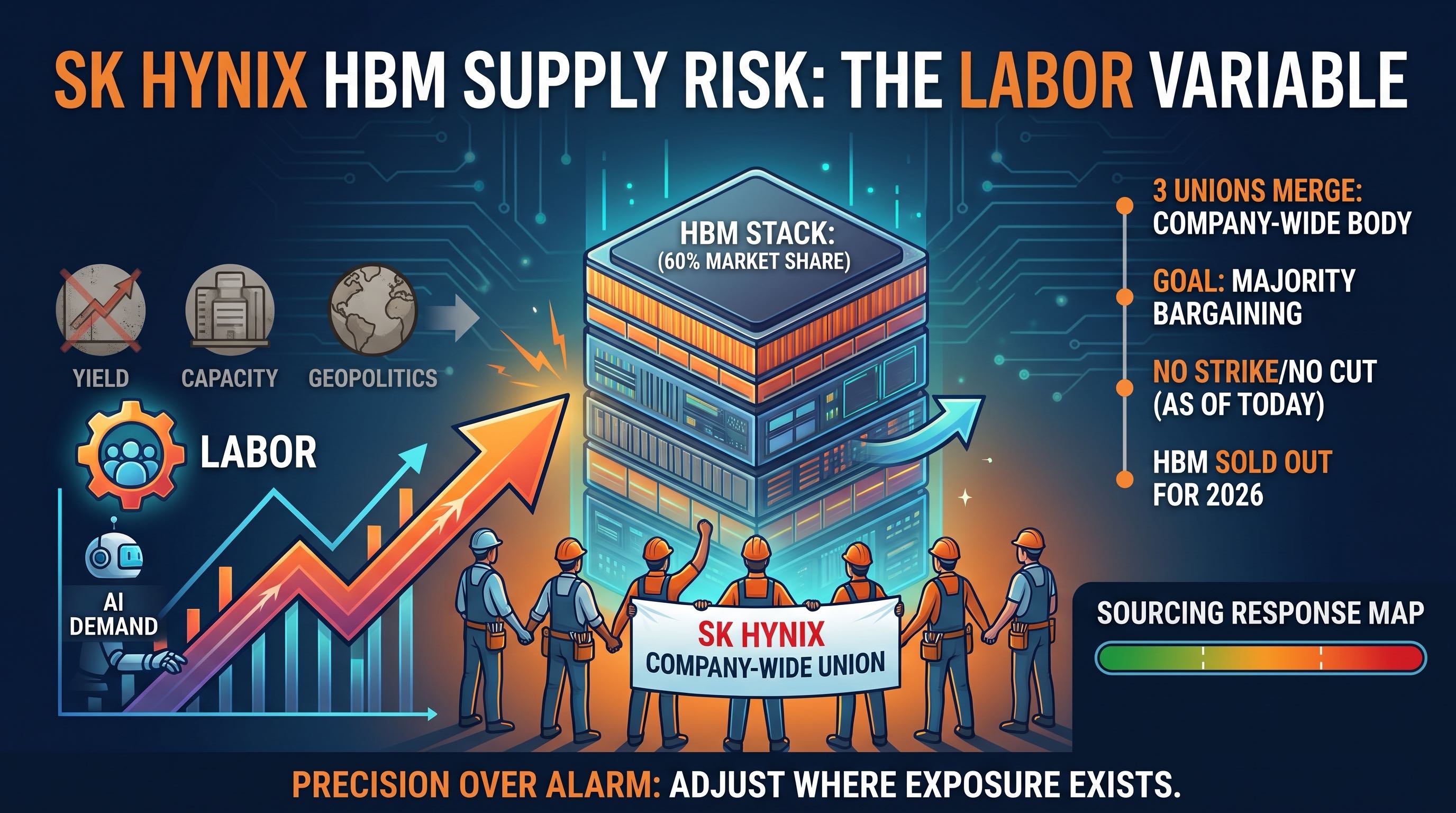
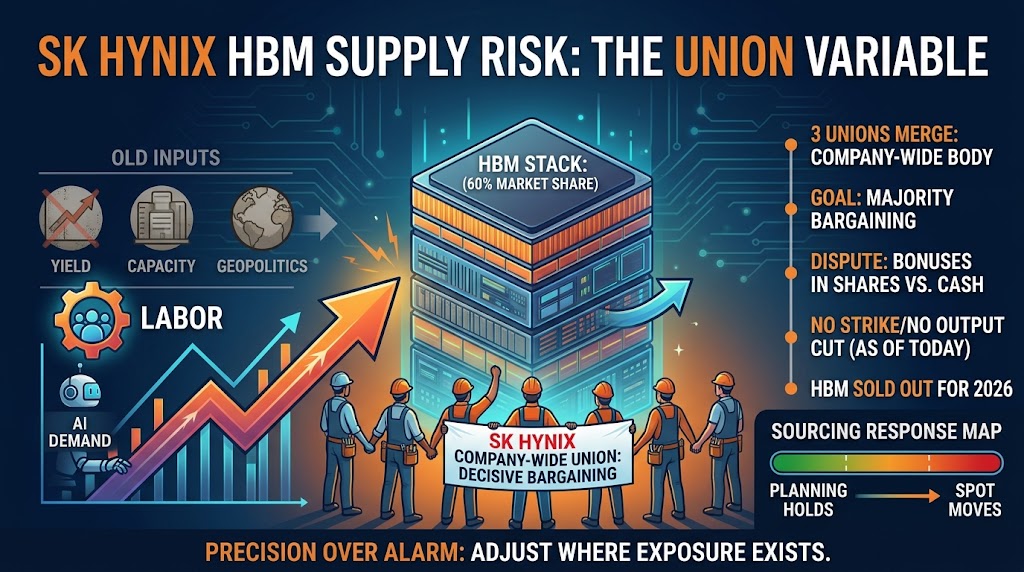
SK Hynix's Korean workforce consolidated three unions into a single company-wide body on August 13, with annual wage talks deadlocked over whether bonuses are paid in cash or shares. For OEM and EMS sourcing teams, the specifics of a Korean labor negotiation matter less than the structural read: for the first time in this cycle, the world's largest HBM supplier carries an organized labor variable, and it arrives precisely as allocation is at its tightest. This piece frames what the development does — and doesn't — change for HBM, server DDR5 and enterprise-SSD sourcing strategy.

memorysupply-riskai-demandsupply-chain
Read more →
When the Allocation War Reaches the Handset: What the 2026 Mobile-DRAM Squeeze Means for OEM and EMS Sourcing Strategy

August 14, 2026 · By WingCore Editorial

When the Allocation War Reaches the Handset: What the 2026 Mobile-DRAM Squeeze Means for OEM and EMS Sourcing Strategy

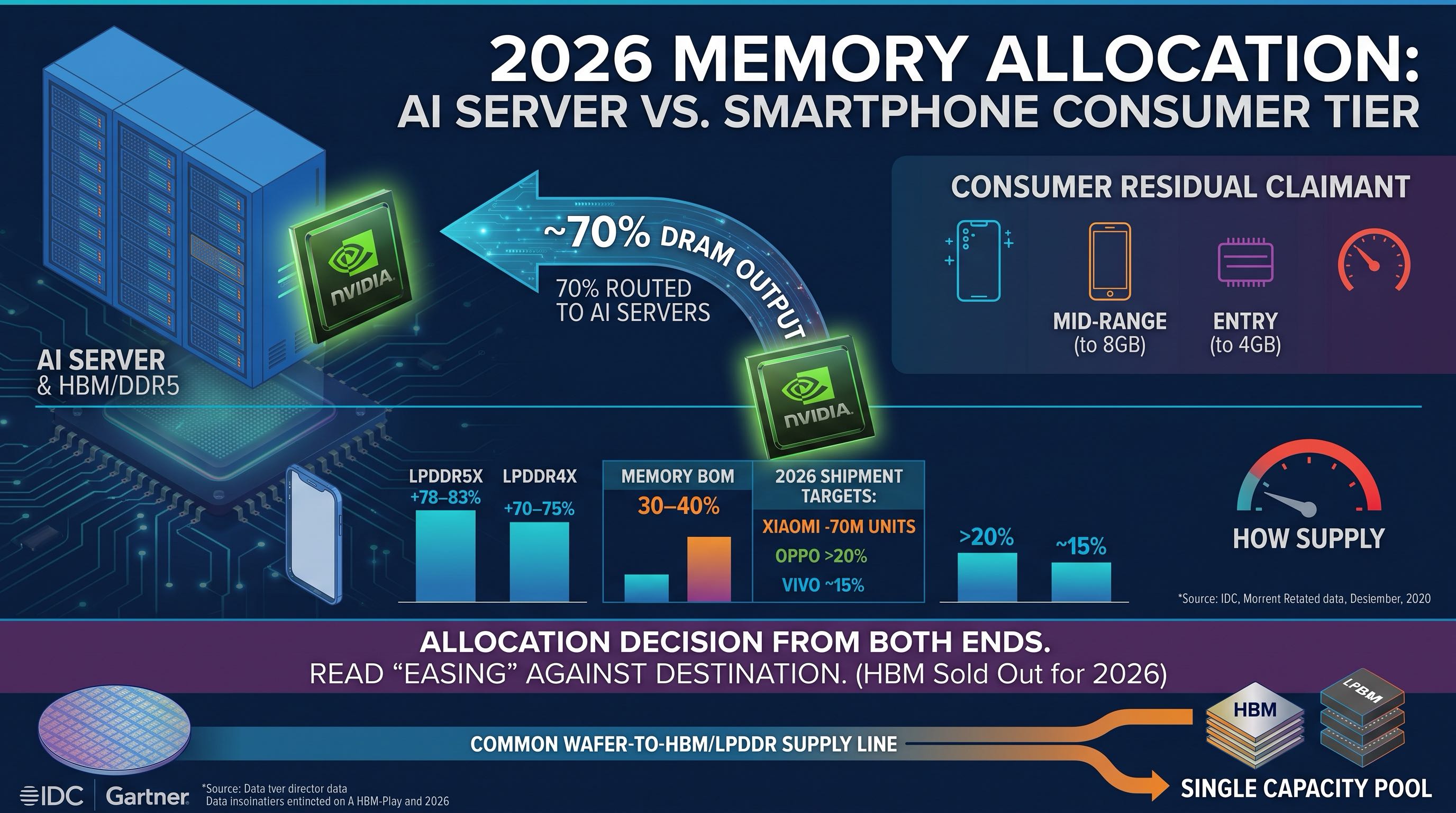
The 2026 memory supercycle is usually narrated through HBM and server DDR5, but its sharpest structural consequence is now landing one tier down — in mobile and consumer DRAM. As the big three route roughly 70% of DRAM output to AI servers, LPDDR pricing has repriced violently, memory has become the dominant line in a handset BOM, and OEMs are responding with order cuts and spec downgrades. For sourcing organizations, this reframes consumer-grade memory from a commodity refill into a managed-allocation problem.

memoryai-demandsupply-riskLPDDR4
Read more →
When the Passives Reprice as a Bloc: What the 2026 MLCC Wave Signals for OEM and EMS Sourcing Strategy Beyond the Memory Cycle

August 10, 2026 · By WingCore Editorial

When the Passives Reprice as a Bloc: What the 2026 MLCC Wave Signals for OEM and EMS Sourcing Strategy Beyond the Memory Cycle

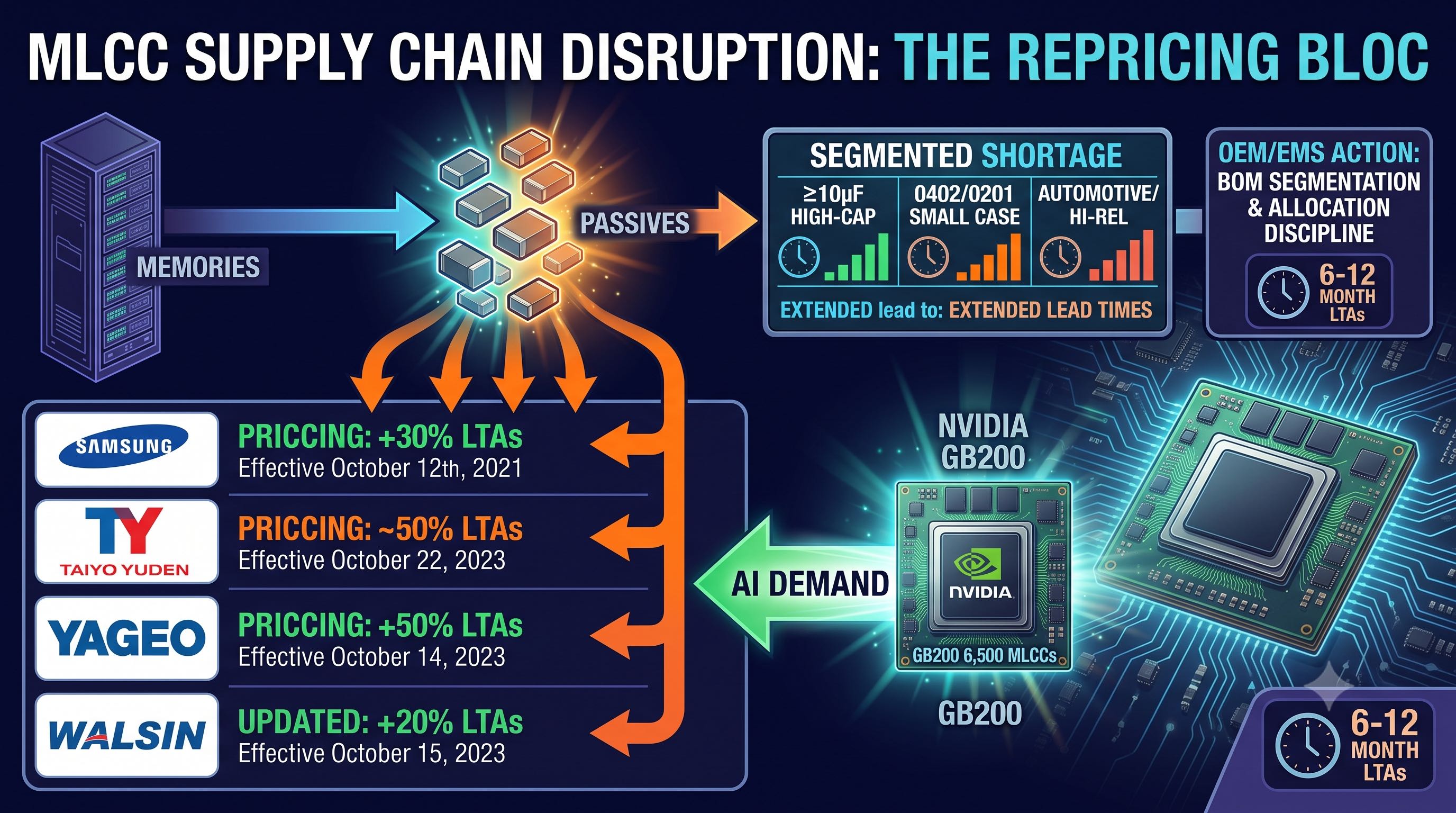
The memory super-cycle has absorbed most sourcing attention through 2026, but a parallel and structurally distinct tightening is now underway in multilayer ceramic capacitors. Samsung Electro-Mechanics' portfolio-wide 30% increase took effect August 1, Taiyo Yuden raises from September 1, and book-to-bill ratios across the Japan-Korea leaders have reached five-year highs. This analysis unpacks what a bloc-wide passive repricing means for BOM cost models, allocation posture, and supplier strategy at the OEM and EMS level.

marketprocurementsupply-risksupply-chain
Read more →
When a Memory Keynote Meets an Allocation Wall: What Samsung's FMS 2026 Roadmap Does — and Doesn't — Do for 2027 Sourcing

August 7, 2026 · By WingCore Editorial

When a Memory Keynote Meets an Allocation Wall: What Samsung's FMS 2026 Roadmap Does — and Doesn't — Do for 2027 Sourcing

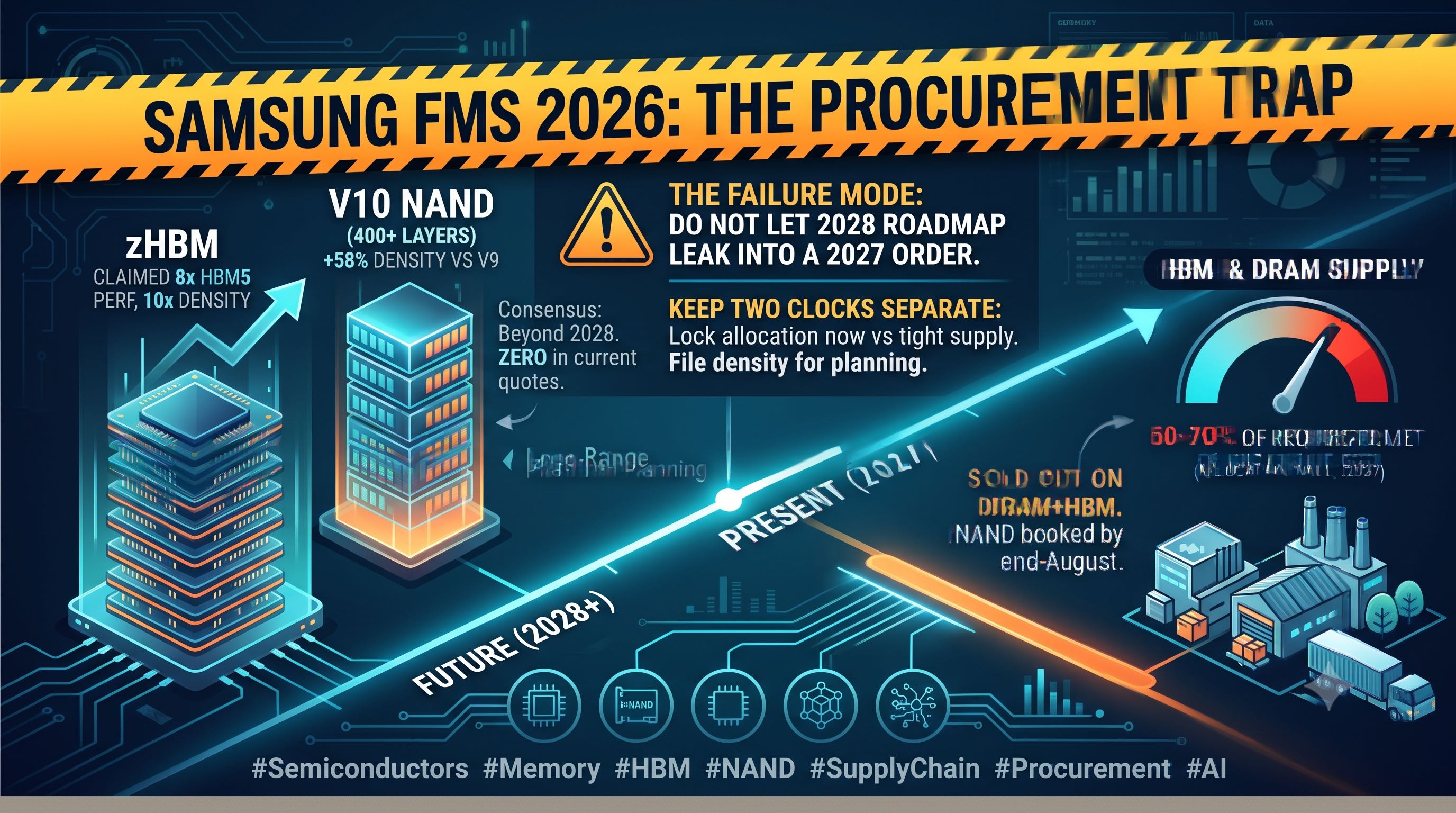
Samsung's FMS 2026 unveil of zHBM, HBM5, and a 400+ layer V10 NAND is a genuine statement of technical direction — and a genuine trap if procurement teams read a 2028 roadmap into 2027 supply. This piece separates roadmap from availability, and lays out how OEM and EMS buyers should — and shouldn't — let next-gen density inform allocation decisions over the next 18 months.

memoryai-demandsamsungsupply-chain
Read more →
When Memory Costs Cross Into Logic: What Qualcomm's September Across-the-Board Hike Signals for OEM and EMS Sourcing Strategy

August 3, 2026 · By WingCore Editorial

When Memory Costs Cross Into Logic: What Qualcomm's September Across-the-Board Hike Signals for OEM and EMS Sourcing Strategy

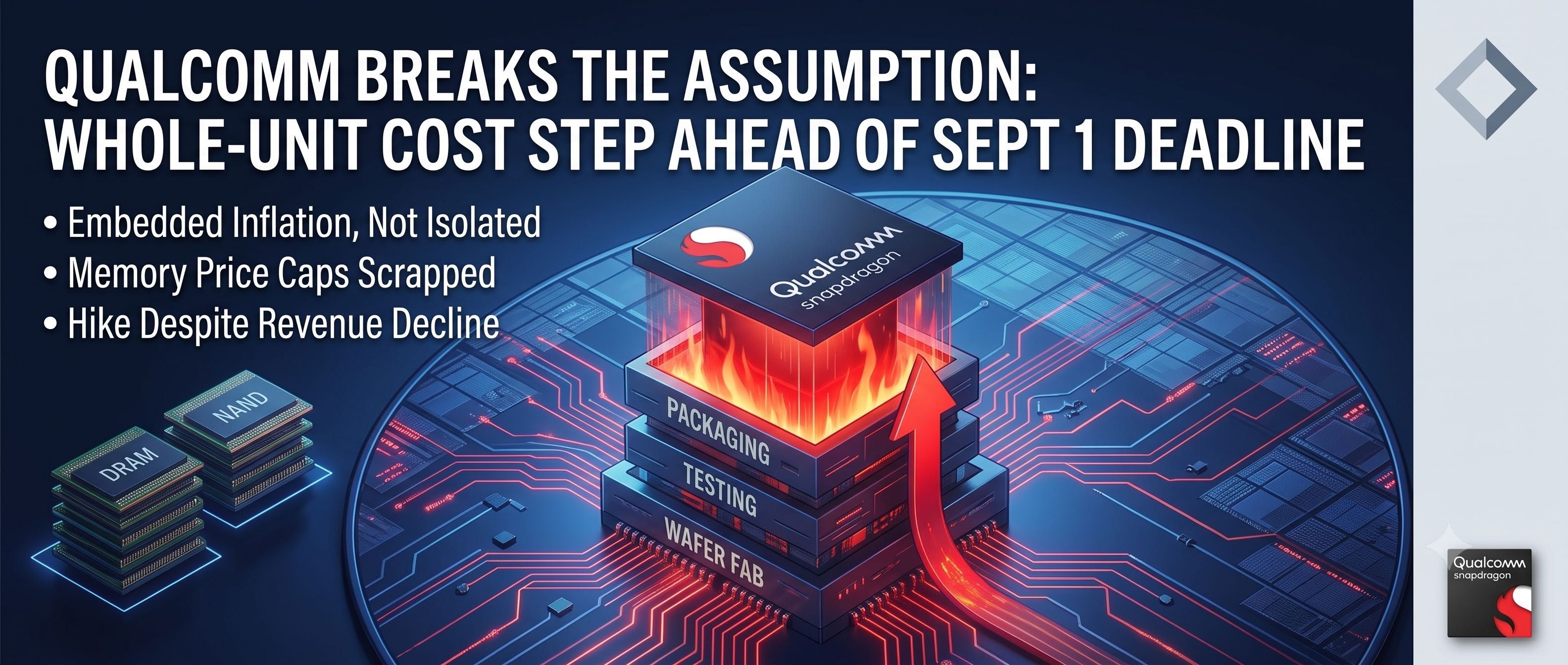
Qualcomm's decision to raise Snapdragon prices across the board on September 1 — explicitly attributed to wafer, test, advanced-packaging, and memory input costs — marks a structural inflection. Memory inflation is no longer contained to the memory line item; it is now propagating into logic and SoC pricing. This piece examines the pass-through mechanism, the likelihood of follow-the-leader repricing across SoC vendors, and what OEM and EMS buyers should change in their BOM cost models and negotiation posture.

marketmemoryai-demandprocurement
Read more →
When the Overlooked Half Reprices Fastest: What Samsung's Q2 NAND ASP Signals for OEM and EMS Storage Sourcing Through 2027

July 31, 2026 · By WingCore Editorial

When the Overlooked Half Reprices Fastest: What Samsung's Q2 NAND ASP Signals for OEM and EMS Storage Sourcing Through 2027

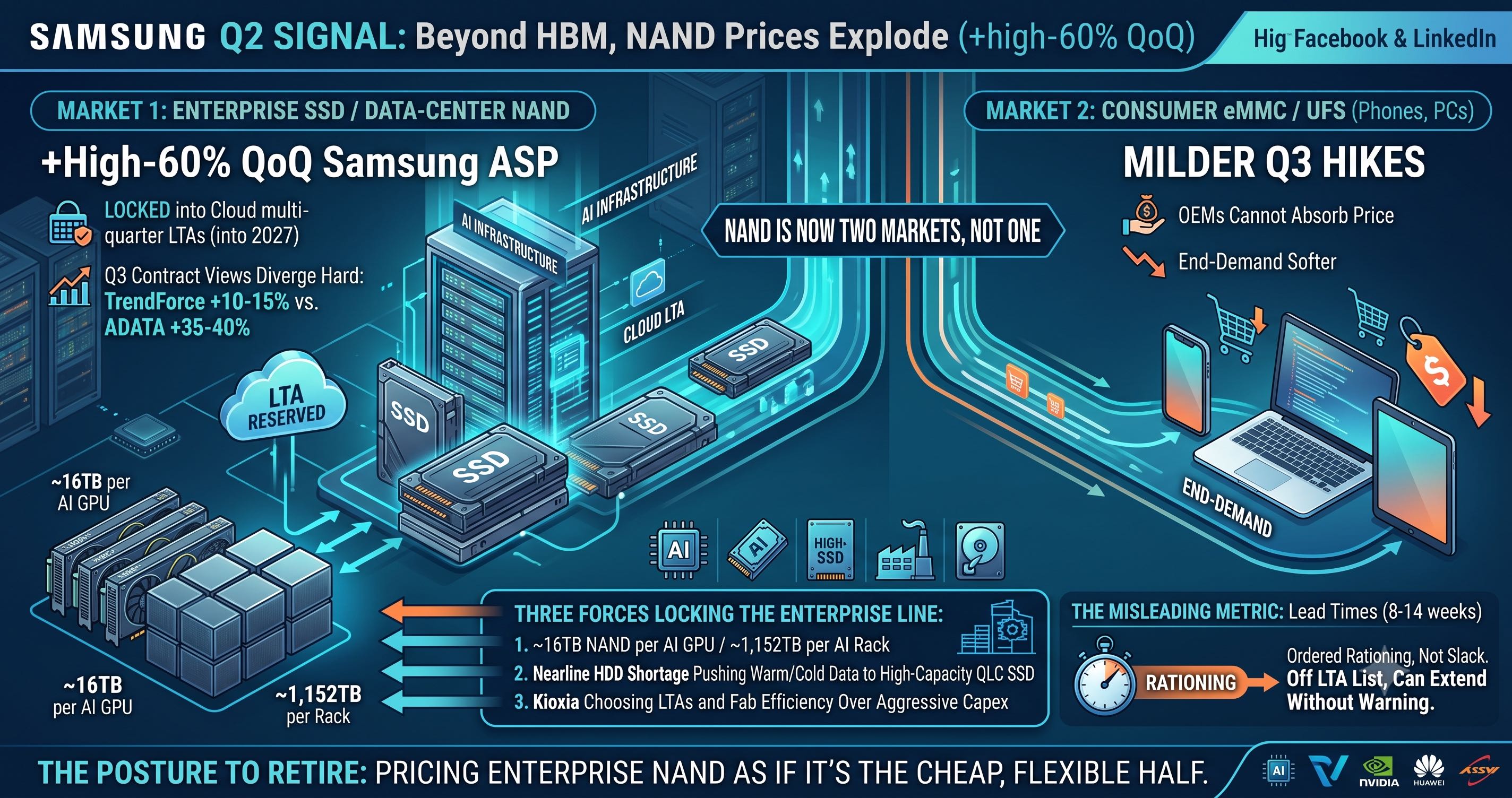
Samsung's Q2 2026 earnings call disclosed something the HBM-dominated narrative has obscured: NAND average selling prices rose faster than DRAM's this quarter — roughly +60% versus +40% QoQ. With enterprise SSD now the largest single NAND application and capacity locked to cloud LTAs into 2027, storage sourcing has bifurcated. This analysis frames the enterprise-versus-consumer split and its allocation logic for OEM and EMS buyers.

memoryai-demandsupply-riskprocurement
Read more →
When a Chipmaker Beats, Raises Guidance, and Still Sells Off: What NXP's Q2 2026 Automotive Print Signals for OEM and EMS Sourcing Strategy

July 29, 2026 · By WingCore Editorial

When a Chipmaker Beats, Raises Guidance, and Still Sells Off: What NXP's Q2 2026 Automotive Print Signals for OEM and EMS Sourcing Strategy

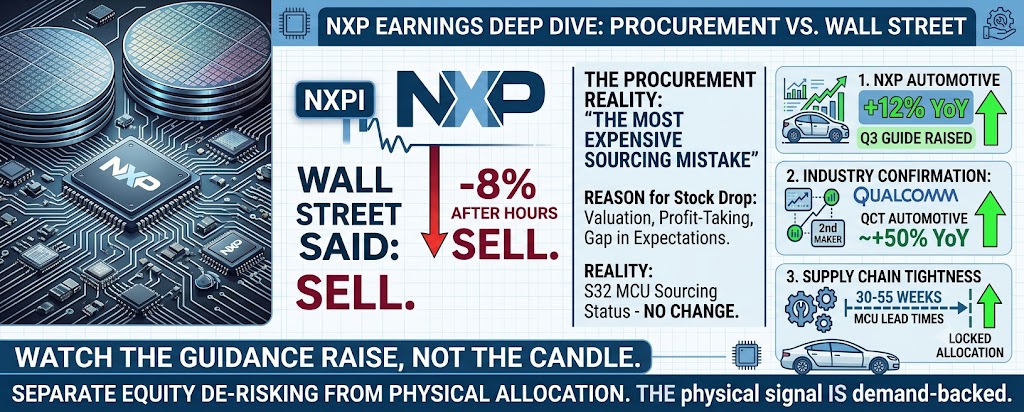
NXP delivered a record automotive quarter in Q2 2026 — a revenue and EPS beat, +12% automotive growth (+17% ex-MEMS), and raised Q3 guidance — yet the stock fell roughly 8% after hours. For OEM and EMS procurement teams, the more useful signal is the widening gap between capital-market sentiment and physical-allocation reality. This piece unpacks what the print means for automotive-grade MCU, analog, and memory sourcing over the next two quarters.

marketprocurement2026-q2supply-chain
Read more →
When Memory Supply Goes to Contract: What Korea's ~$950B AI-Chip Pacts Signal for OEM and EMS Allocation Strategy Through 2030

July 27, 2026 · By WingCore Editorial

When Memory Supply Goes to Contract: What Korea's ~$950B AI-Chip Pacts Signal for OEM and EMS Allocation Strategy Through 2030

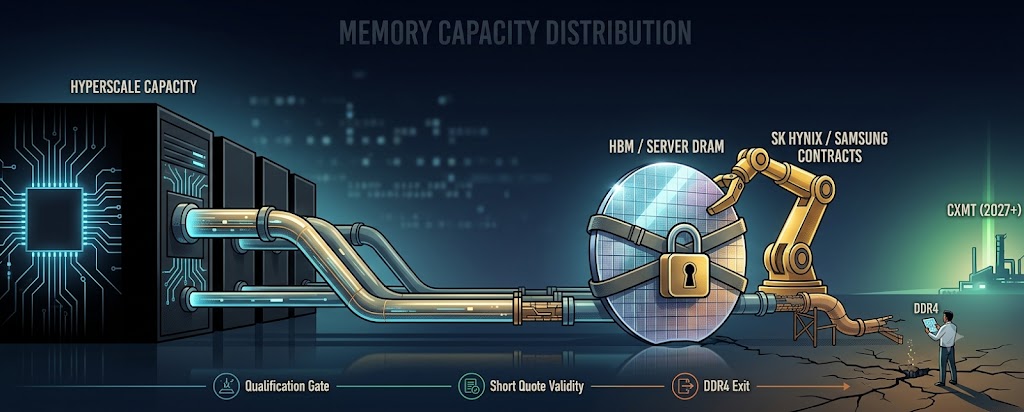
Korea's weekend announcement of ~$950B in SK Hynix and Samsung supply commitments to US hyperscalers is not a capacity-expansion story that eases the market. It is a demand-side lock-in that formalizes hyperscaler priority over merchant and commercial channels for leading HBM and server DRAM. For OEM and EMS sourcing teams, the practical question is no longer whether memory stays tight, but where in the allocation chain your program sits — and what to change now.

memoryai-demandsupply-chainsamsung
Read more →
When Chinese DRAM Starts Closing the Price Gap: What Narrowing DDR5 Spreads Signal for OEM and EMS Second-Sourcing Strategy Into 2027

July 24, 2026 · By WingCore Editorial

When Chinese DRAM Starts Closing the Price Gap: What Narrowing DDR5 Spreads Signal for OEM and EMS Second-Sourcing Strategy Into 2027

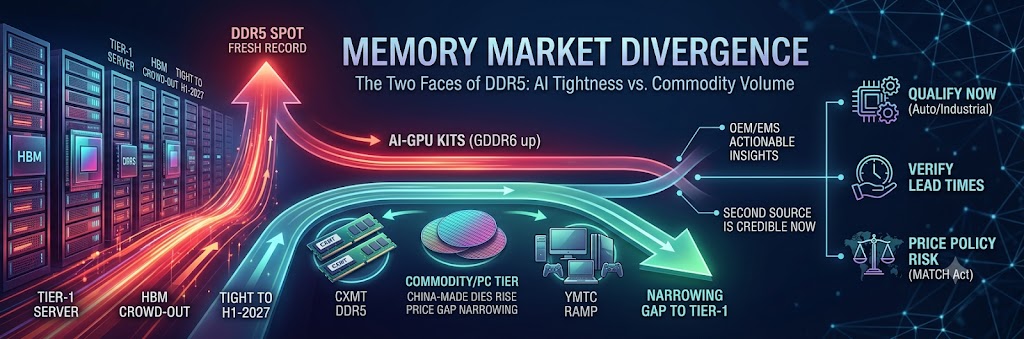
DDR5 module spot prices reached a fresh record this week even as China-made dies began narrowing the gap to established suppliers — a combination that reads as contradiction only until you separate the commodity tier from the server tier. For OEM and EMS sourcing teams, the more consequential development is not the spot print but the arrival of a credible second source at the low end, and the qualification, lead-time and policy questions that come with it.

memorysupply-chainsupply-riskmarket
Read more →
When HBM Crowds Out DDR5: The Wafer-Allocation Math That Keeps Server Memory Tight Through 2027

July 22, 2026 · By WingCore Editorial

When HBM Crowds Out DDR5: The Wafer-Allocation Math That Keeps Server Memory Tight Through 2027

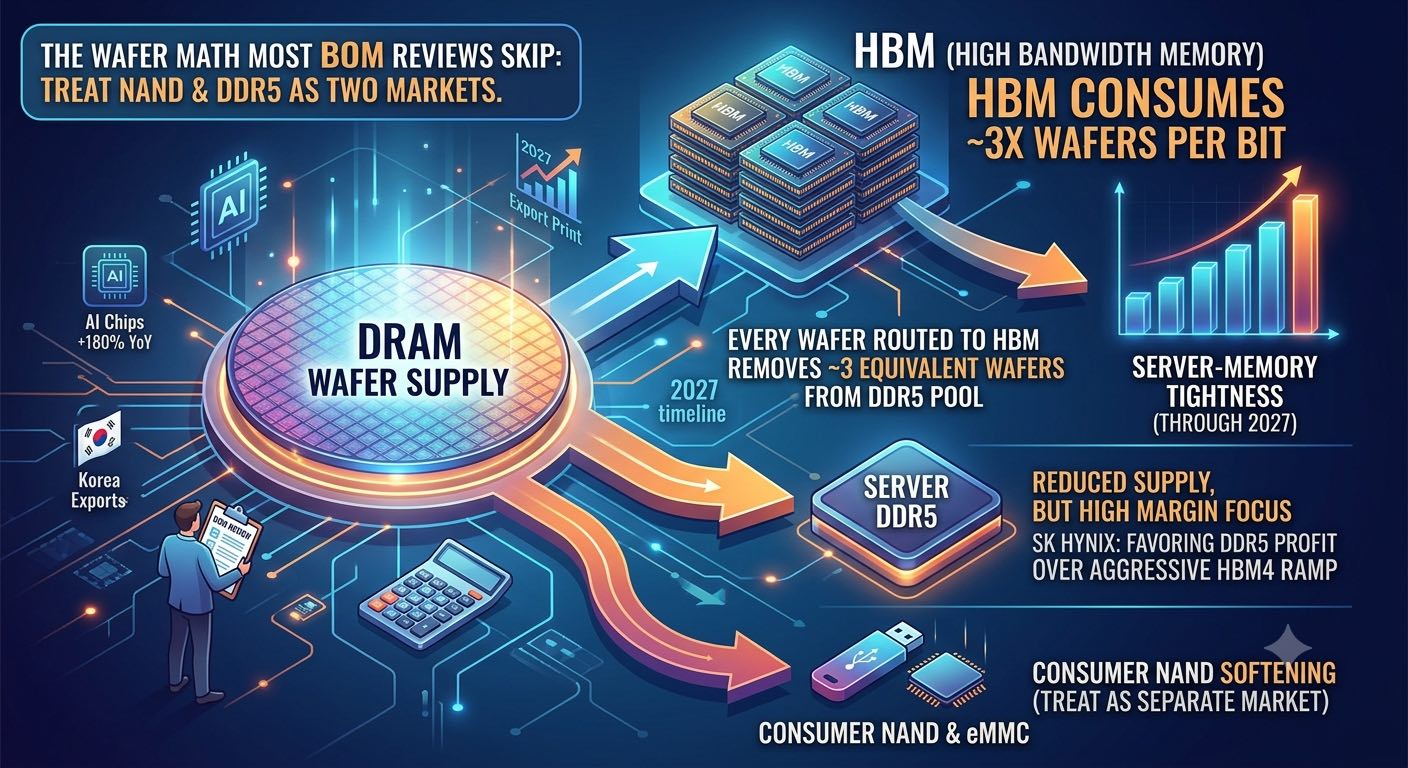
A record Korean export print and a memory-led equity rally grabbed the headlines this week, but the more durable story for OEM and EMS sourcing teams sits one layer down in the wafer allocation. HBM and DDR5 draw from the same DRAM capacity, at roughly a three-to-one exchange, and the leading maker is signaling that it will keep favoring DDR5 margin over an aggressive HBM4 ramp. This piece walks through why server-grade DDR5 tightness is structural rather than cyclical, and what that means for planning through H1 2027.

memoryai-demandsupply-risksupply-chain
Read more →
When the Bottleneck Moves Onshore: What TSMC's $100 Billion Arizona Expansion and Two Advanced Packaging Facilities Signal for OEM and EMS Sourcing Strategy

July 20, 2026 · By WingCore Editorial

When the Bottleneck Moves Onshore: What TSMC's $100 Billion Arizona Expansion and Two Advanced Packaging Facilities Signal for OEM and EMS Sourcing Strategy

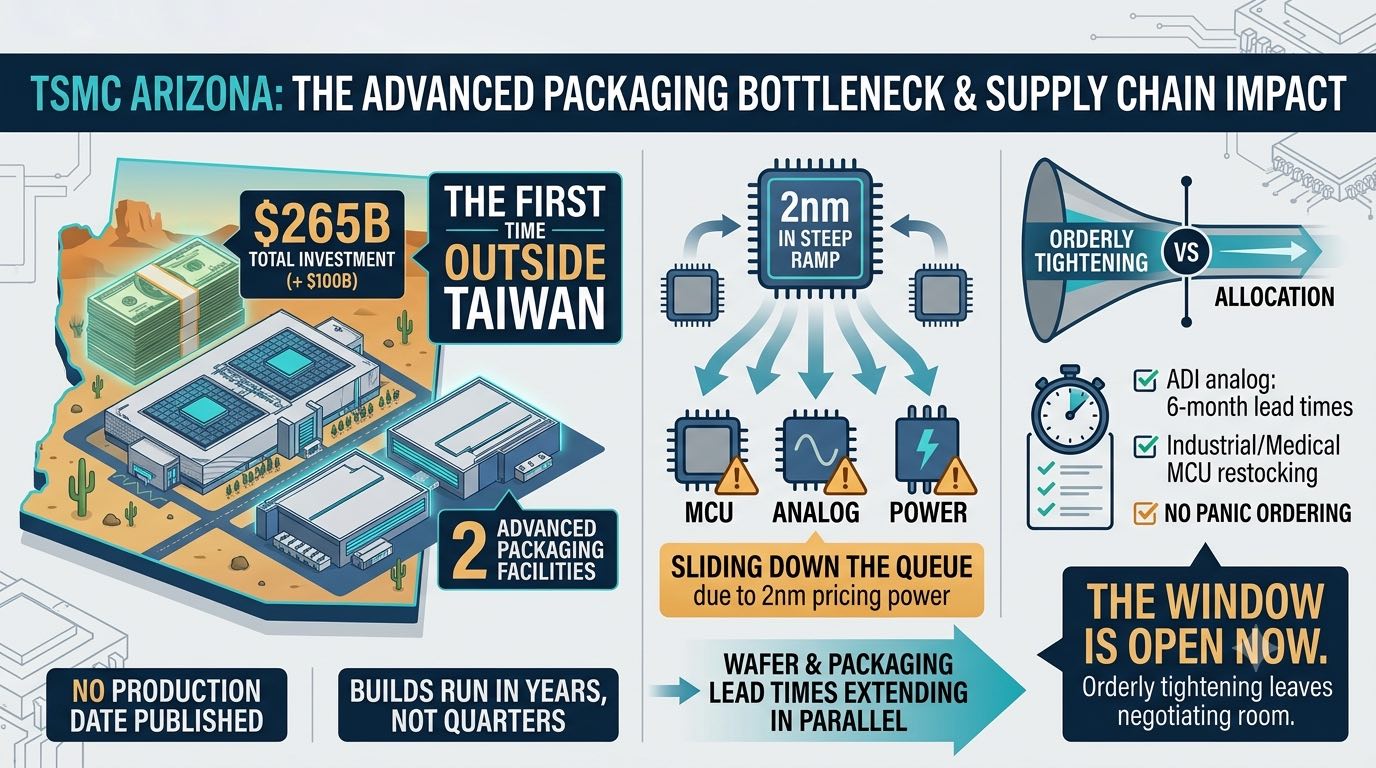
TSMC's July 16 announcement of an additional $100 billion for Arizona brought its total commitment to the state to $265 billion and, for the first time, placed advanced packaging capacity outside Taiwan. Read alongside 2Q26 results and this week's lead-time reporting, the announcement is less a supply relief signal than a formal acknowledgement of where the binding constraint in this cycle actually sits.

marketai-demandprocurement2026-q2
Read more →
When the Cost Wave Crosses Out of Memory: What the July 2026 Analog, MCU, Power and Passive Price Increases Signal for OEM and EMS Sourcing Strategy

July 17, 2026 · By WingCore Editorial

When the Cost Wave Crosses Out of Memory: What the July 2026 Analog, MCU, Power and Passive Price Increases Signal for OEM and EMS Sourcing Strategy

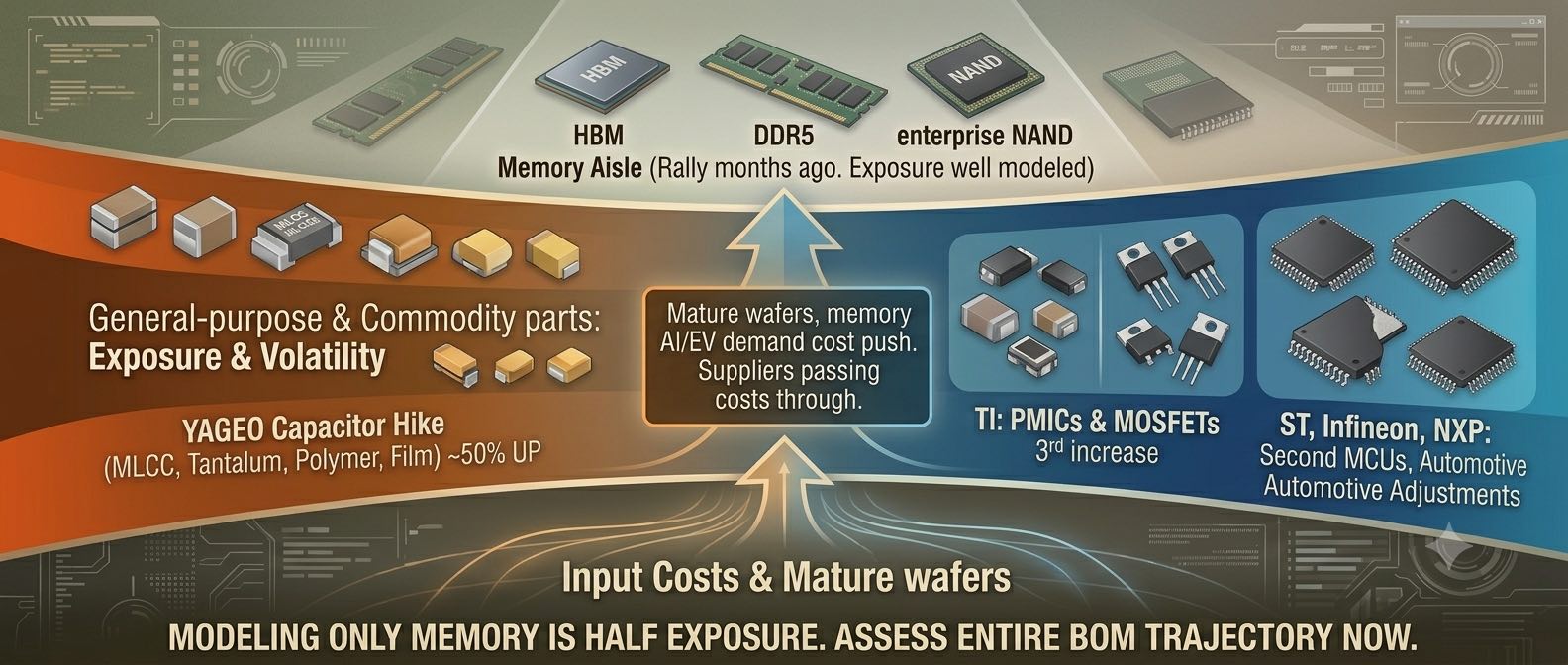
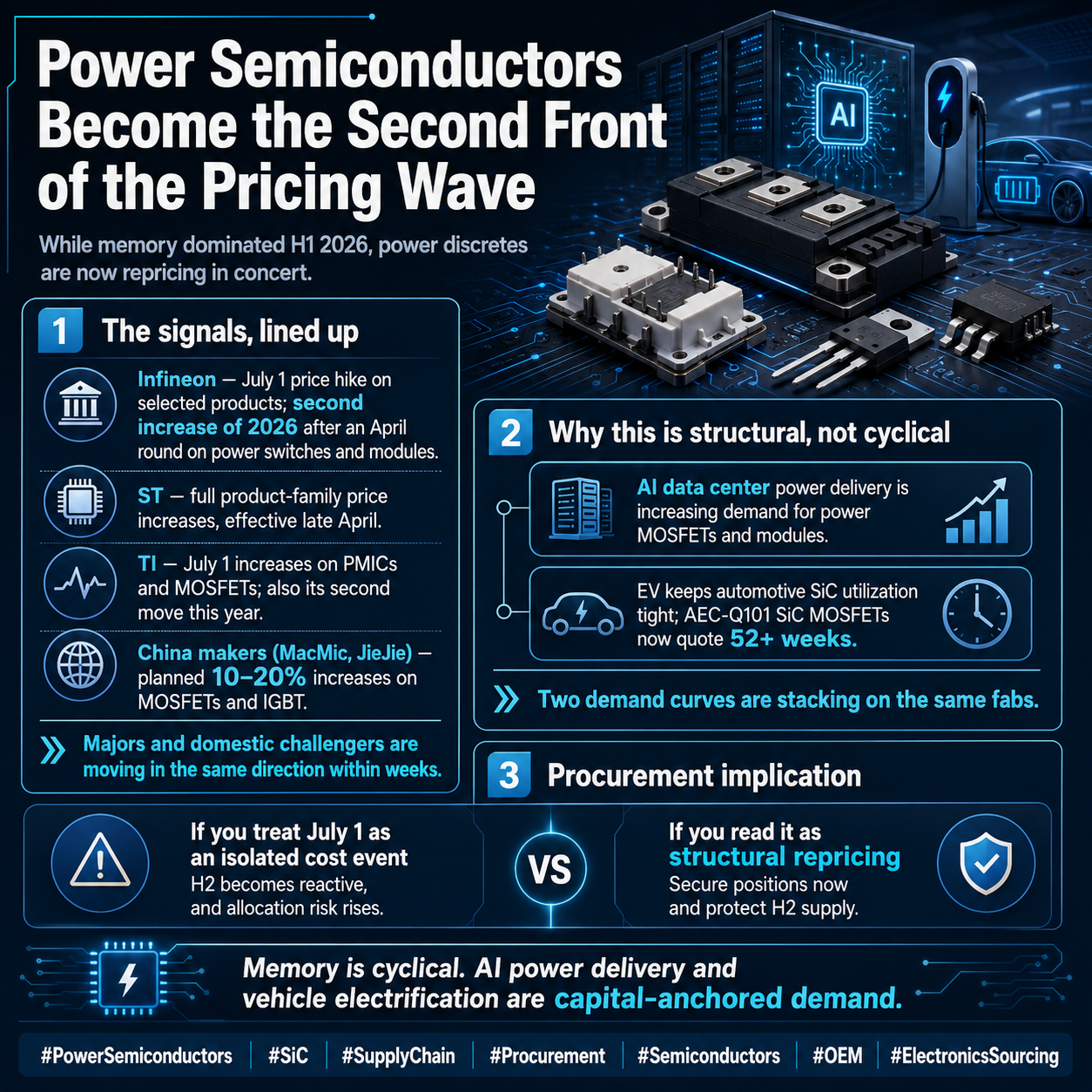
Through the first half of 2026, procurement narratives were dominated by memory. The July repricing cycle marks a structural shift: cost pressure has crossed decisively out of memory and into analog, microcontrollers, power devices and passive components. YAGEO's broad capacitor adjustment, Texas Instruments' third increase of the year, and second rounds from STMicroelectronics, Infineon and NXP together reframe how OEM and EMS teams should model non-memory BOM cost, quote validity and inventory strategy into the second half.

marketprocurementsupply-chainsupply-risk
Read more →
When a Specialty-Memory Designer Books a 400% Profit Jump: What Ingenic's H1 2026 Guidance Signals for OEM and EMS Sourcing of Legacy DRAM, SRAM and NOR

July 15, 2026 · By WingCore Editorial

When a Specialty-Memory Designer Books a 400% Profit Jump: What Ingenic's H1 2026 Guidance Signals for OEM and EMS Sourcing of Legacy DRAM, SRAM and NOR

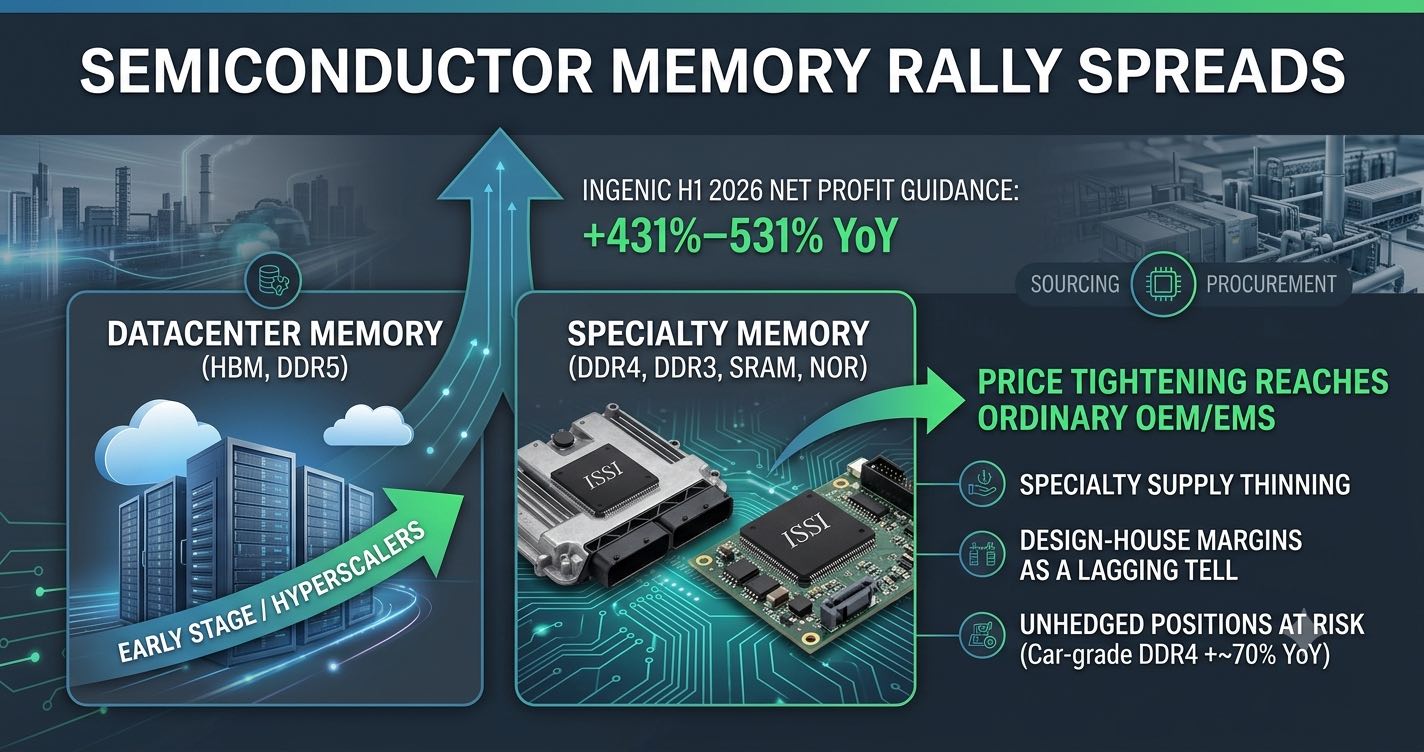
Ingenic Semiconductor guided first-half 2026 net profit up 431%-531% year-on-year on July 13, driven by the memory super-cycle lifting prices across its DRAM and Flash portfolio, including the ISSI specialty lines. For OEM and EMS sourcing teams, the print matters less as an earnings event than as confirmation that the rally has propagated from HBM and DDR5 into the legacy and specialty segments that populate industrial and automotive bills of materials.

memorysupply-riskindustrialprocurement
Read more →
When the Tape and the Physical Market Diverge: What the July 2026 Semiconductor Sell-Off Does and Does Not Tell OEM and EMS Sourcing Teams

July 13, 2026 · By WingCore Editorial

When the Tape and the Physical Market Diverge: What the July 2026 Semiconductor Sell-Off Does and Does Not Tell OEM and EMS Sourcing Teams

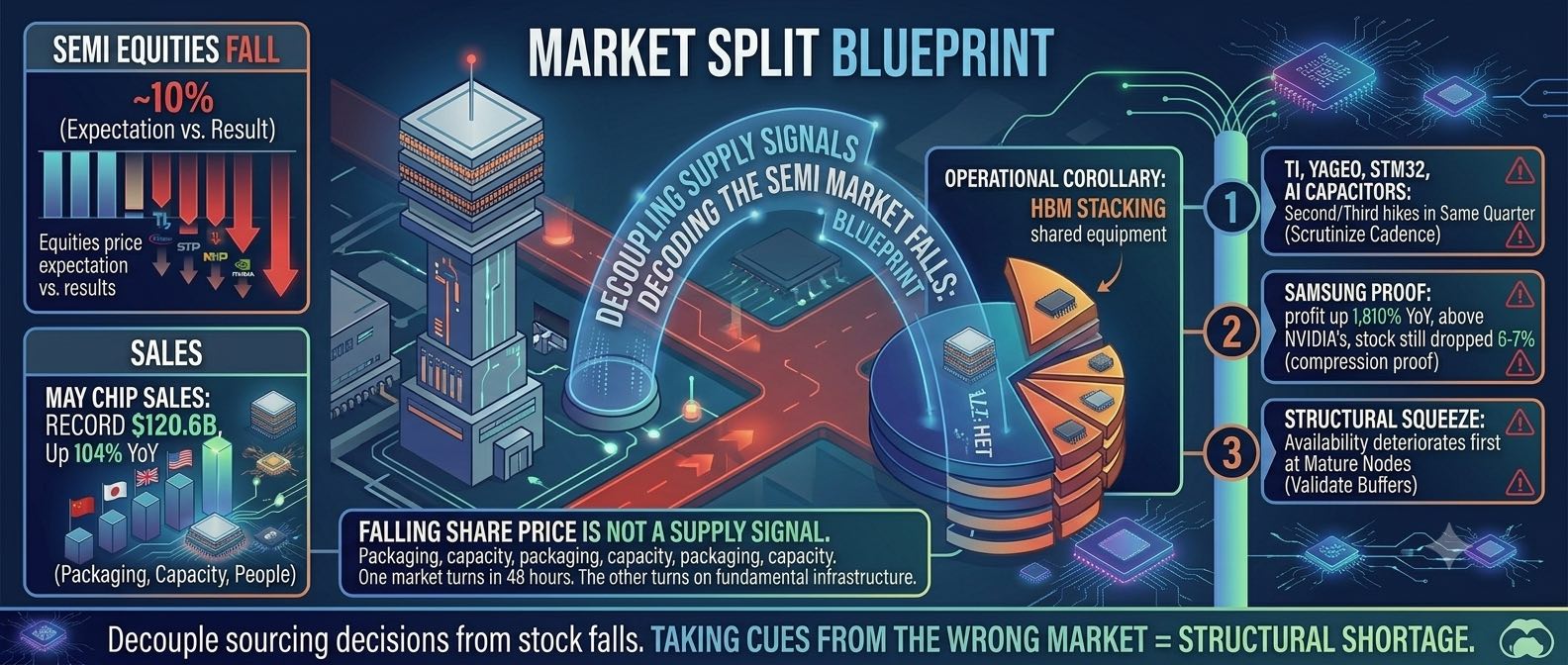
In the week of 6–13 July 2026, semiconductor equities gave back roughly 10% across two sessions even as the SIA reported record May global sales of $120.6B and Samsung guided second-quarter operating profit to KRW 89.4T. For procurement organisations, this divergence is not a paradox to be resolved but a distinction to be operationalised. This analysis separates what the equity market repriced from what the physical market actually did, and sets out the sourcing implications for the balance of 2026 and beyond.

marketai-demandmemoryprocurement
Read more →
When a Memory Maker Locks a Decade of Raw Wafers: What Micron's $3B GlobalWafers Move Signals for OEM and EMS Sourcing Strategy Through 2027

July 10, 2026 · By WingCore Editorial

When a Memory Maker Locks a Decade of Raw Wafers: What Micron's $3B GlobalWafers Move Signals for OEM and EMS Sourcing Strategy Through 2027

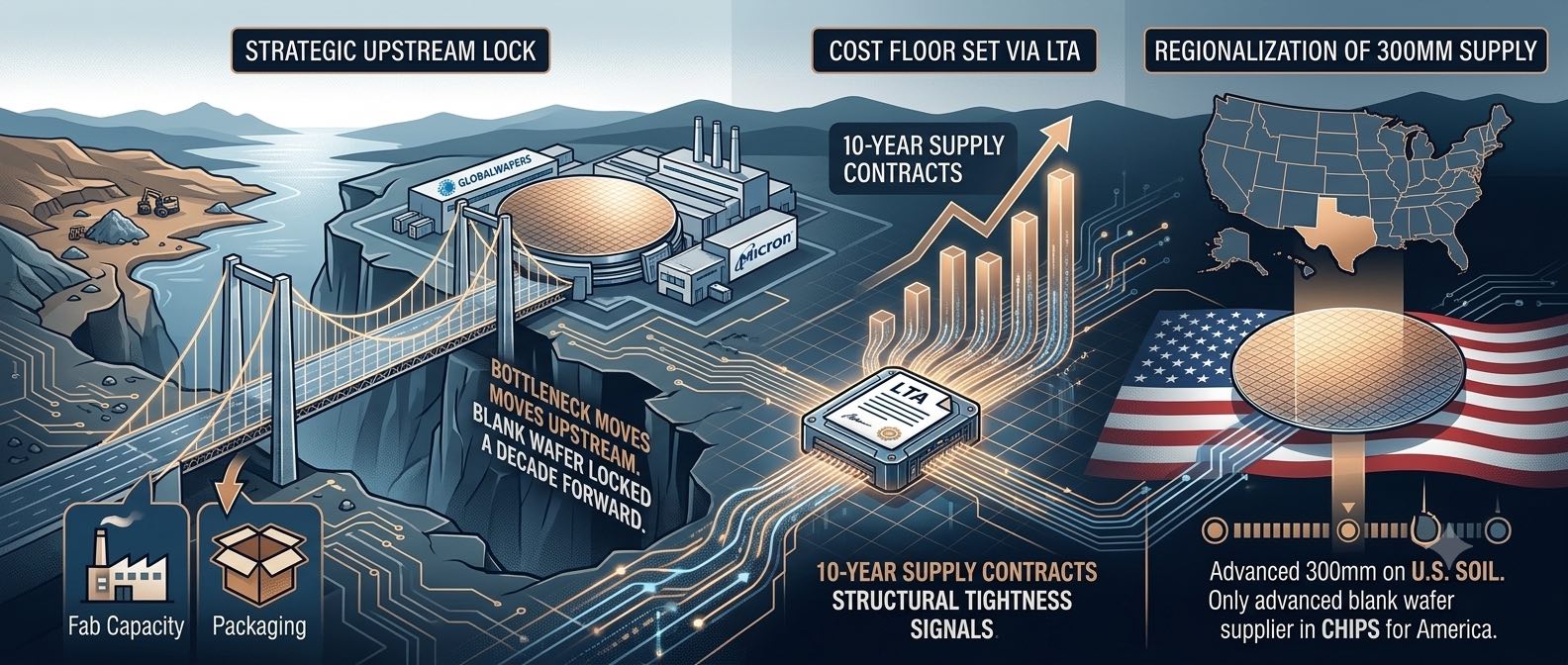
Micron's July 9 announcement — up to $3 billion to strengthen the U.S. semiconductor ecosystem, $500M in strategic financing for GlobalWafers' Sherman, Texas 300mm plant, and a ten-year raw silicon wafer supply agreement — is being read by markets as a stock story. For sourcing organizations, the more durable signal sits one layer higher in the chain: the bottleneck is migrating from fab capacity to substrate supply, and it is being regionalized.

memorysupply-chainsupply-riskprocurement
Read more →
When the Memory Rally Bifurcates: How OEM and EMS Sourcing Teams Should Read the 3Q26 Split Between AI-Driven and Consumer Demand

July 8, 2026 · By WingCore Editorial

When the Memory Rally Bifurcates: How OEM and EMS Sourcing Teams Should Read the 3Q26 Split Between AI-Driven and Consumer Demand

TrendForce's July 3 pricing survey confirmed that 3Q26 memory contract increases are moderating (DRAM +13-18% QoQ, NAND +10-15%), but the more consequential development is structural, not numerical. For the first time this cycle, the market is separating into two demand regimes requiring distinct sourcing playbooks: an AI- and server-driven segment that stays firmly undersupplied, and a consumer-facing segment where buyer affordability has finally capped pricing power.

marketmemoryai-demandprocurement
Read more →
When the HBM Leader Lists in the US: What SK hynix's July 10 Nasdaq Debut Means for OEM and EMS Memory Sourcing Strategy Through 2027

July 6, 2026 · By WingCore Editorial

When the HBM Leader Lists in the US: What SK hynix's July 10 Nasdaq Debut Means for OEM and EMS Memory Sourcing Strategy Through 2027

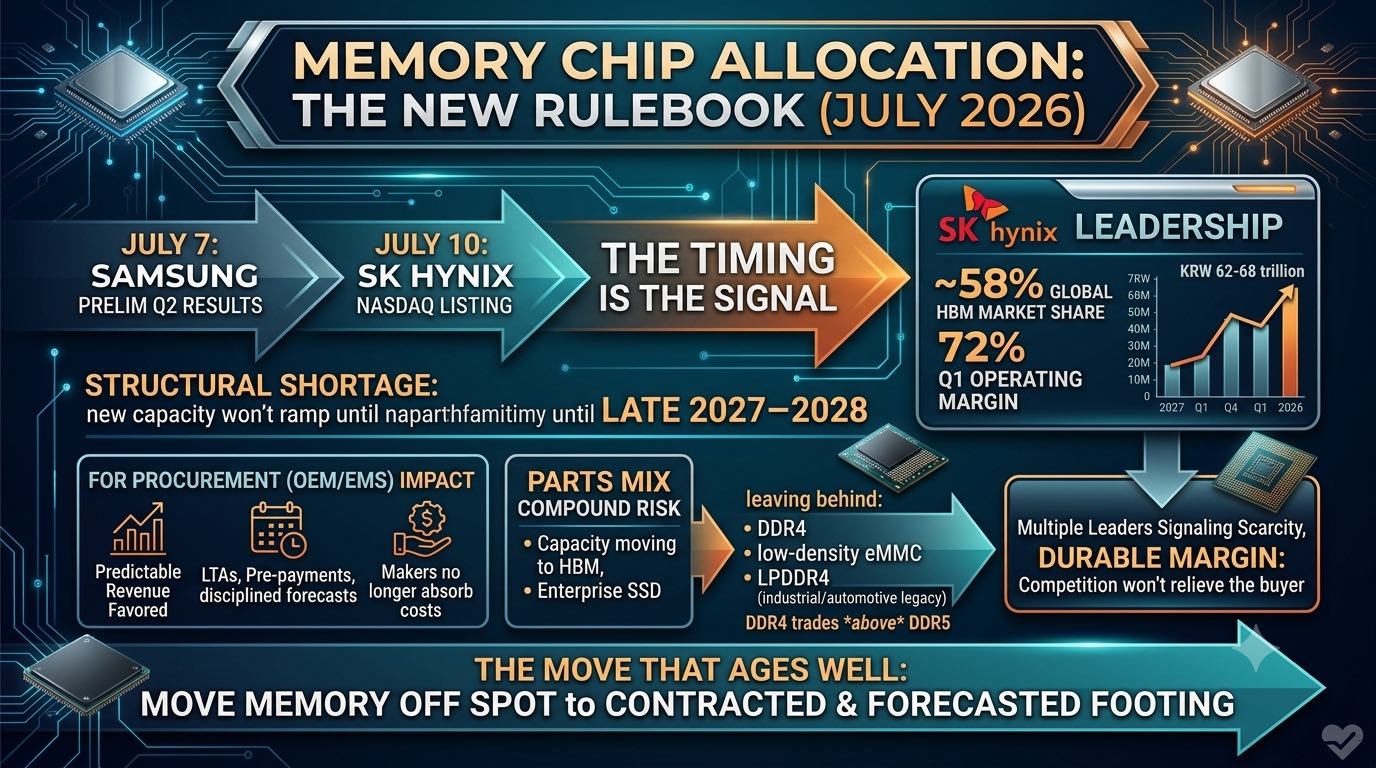
SK hynix's July 10 Nasdaq ADR listing, arriving days after Samsung's July 7 Q2 preliminary print, binds the dominant memory supplier's capacity pricing to the public markets. For OEM and EMS procurement leaders, the event is less a finance milestone than a structural signal about how allocation, contracting discipline and pricing power will behave through 2027. This briefing reads the move for sourcing strategy rather than for shareholders.

memoryai-demandmarketsupply-risk
Read more →
When a Hyperscaler Chooses to Recycle DDR4 Instead of Buying DDR5: What Meta's Vistara CXL ASIC Signals for OEM and EMS Memory Sourcing

July 3, 2026 · By WingCore Editorial

When a Hyperscaler Chooses to Recycle DDR4 Instead of Buying DDR5: What Meta's Vistara CXL ASIC Signals for OEM and EMS Memory Sourcing

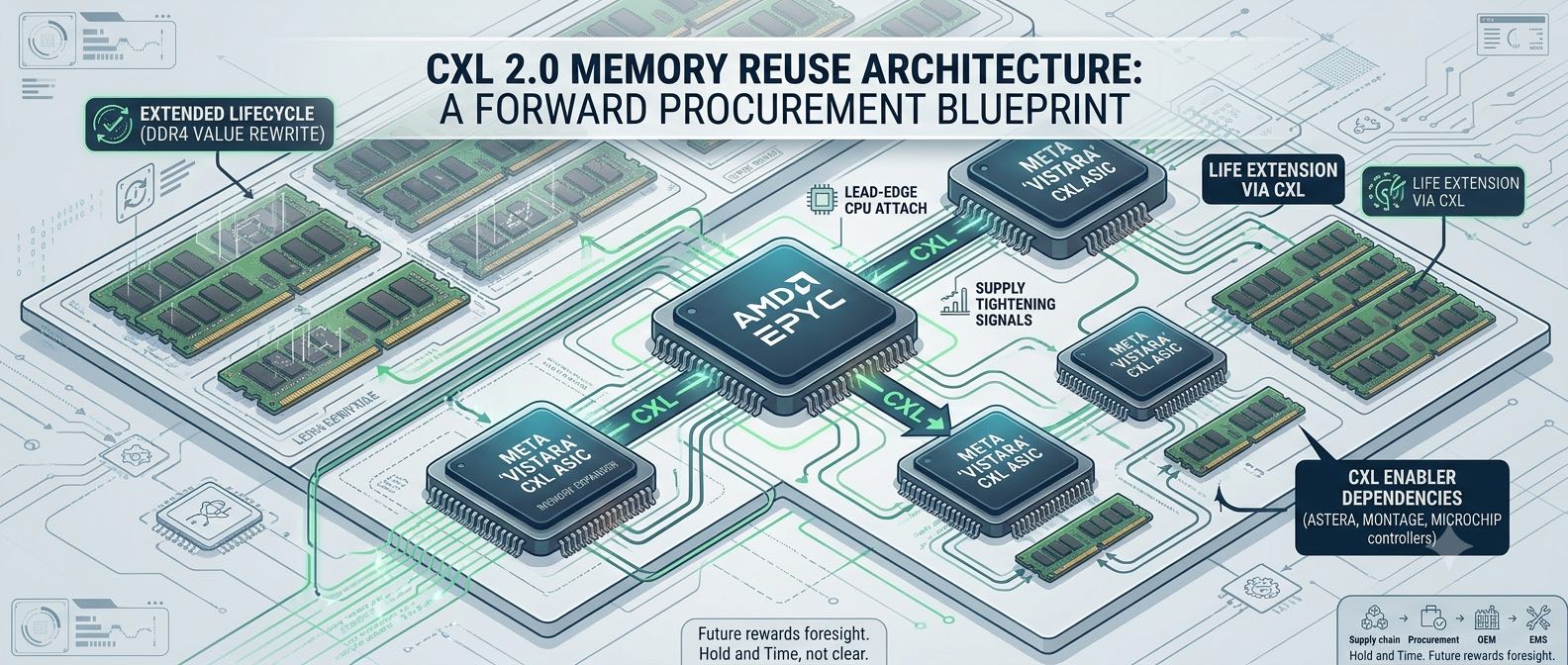
At ISCA 2026, Meta disclosed Vistara, a first-generation custom CXL 2.0 memory-expander ASIC that attaches legacy DDR4-2400 to DDR5-only AMD EPYC servers at production scale. Beneath the engineering headline sits a structural sourcing signal for OEM and EMS procurement teams.

memoryai-demandsupply-chainsupply-risk
Read more →
When a Single Disclosed Contract Locks a Year of AI-Server MLCC Output: What Samsung Electro-Mechanics' $294M Deal Signals for OEM and EMS Passive Sourcing

July 1, 2026 · By WingCore Editorial

When a Single Disclosed Contract Locks a Year of AI-Server MLCC Output: What Samsung Electro-Mechanics' $294M Deal Signals for OEM and EMS Passive Sourcing

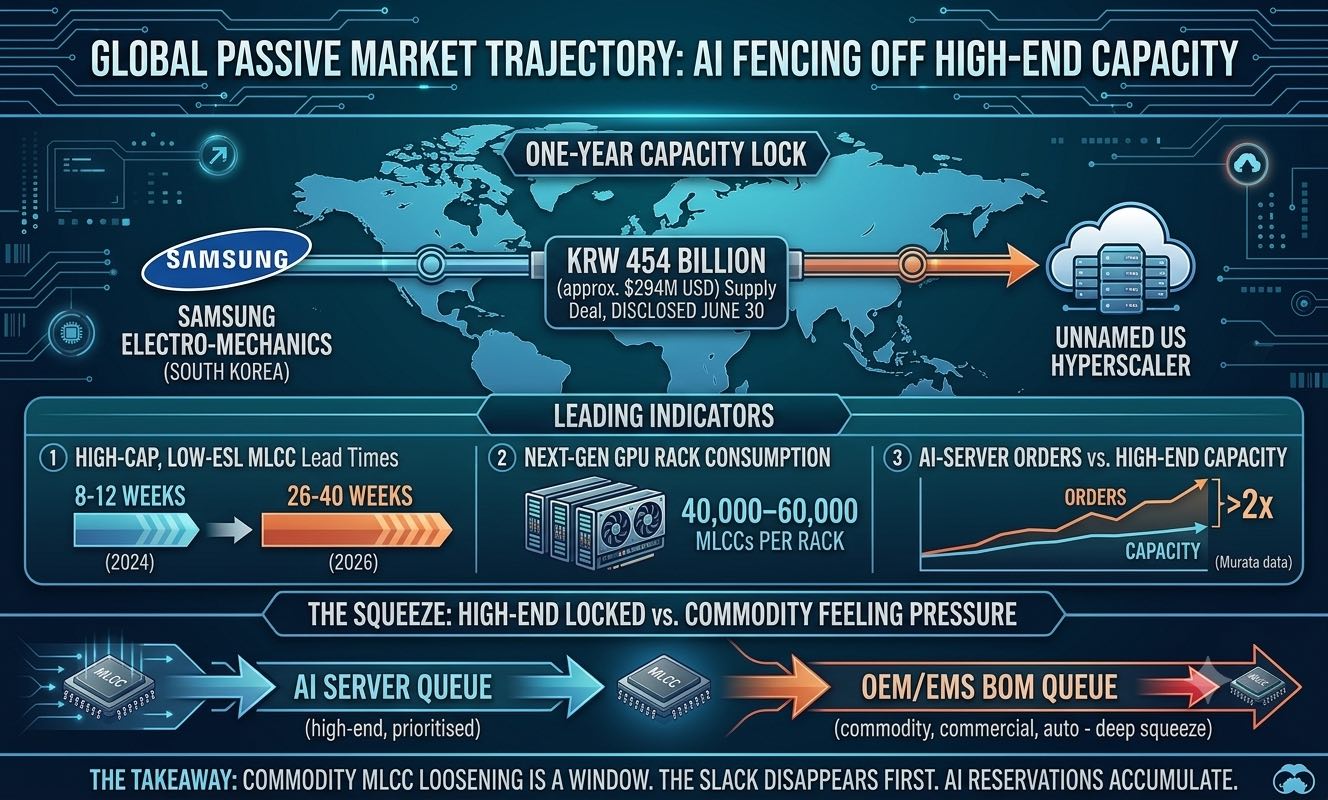
Samsung Electro-Mechanics disclosed a one-year, roughly $294M MLCC supply contract with an unnamed US hyperscaler on June 30, with deliveries beginning January 2027. For OEM and EMS procurement teams, the significance is not the headline value but the structural read: high-end passive capacity is now being fenced off through disclosed long-term agreements, and the pressure flows down to the commodity parts most buyers actually carry.

marketai-demandprocurementsamsung
Read more →
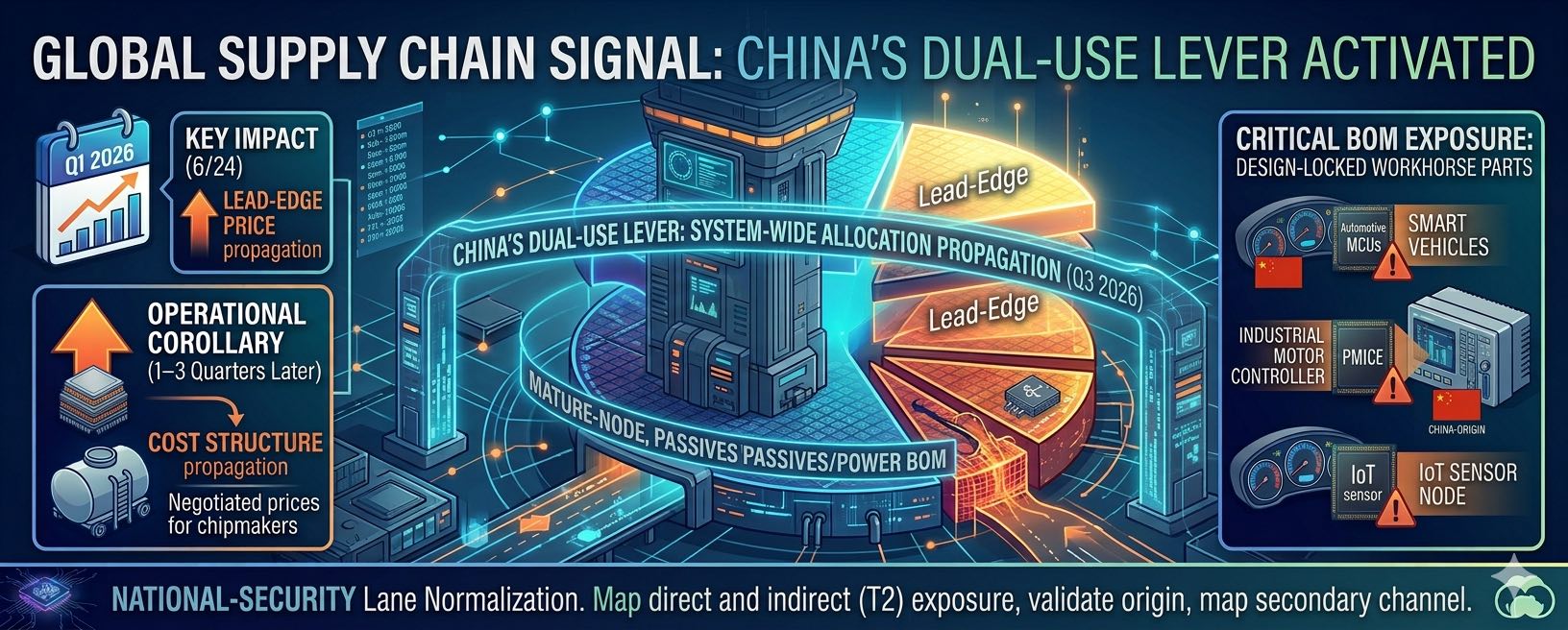
China's June 22 Dual-Use and Rare-Earth Listings Are a Sourcing Signal, Not Just a Geopolitical Headline: What OEM and EMS Procurement Teams Should Read From It

June 29, 2026 · By WingCore Editorial

China's June 22 Dual-Use and Rare-Earth Listings Are a Sourcing Signal, Not Just a Geopolitical Headline: What OEM and EMS Procurement Teams Should Read From It

On June 22, Beijing answered Washington's early-June military-company designations with two coordinated orders: 10 US firms added to its export-control list and 46 barred from government procurement. A rare-earth miner and a magnet maker were named, and the language reached "worldwide." For OEM and EMS sourcing organizations, the durable takeaway is not the specific names — it is the normalization of dual-use logic and extraterritorial reach as routine policy tools.

marketprocurementsupply-risksupply-chain
Read more →
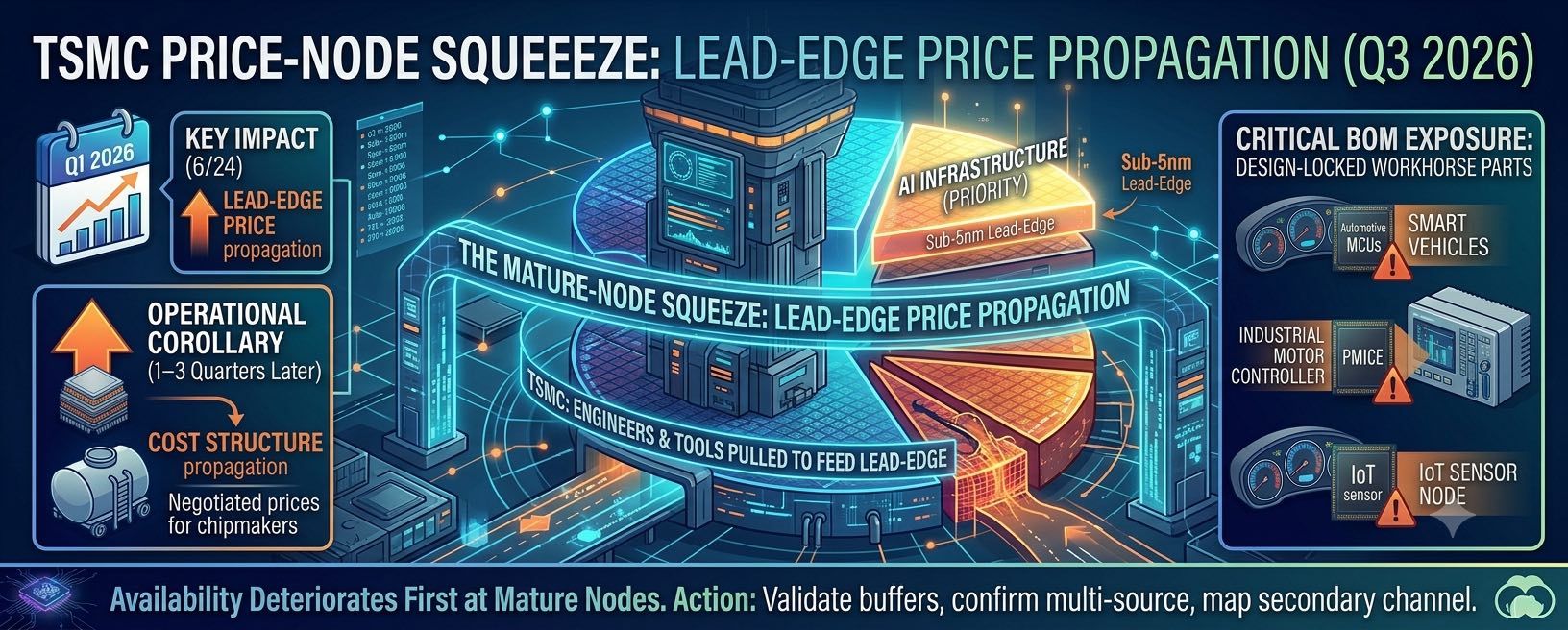
TSMC's June 24 All-Node Price Hike Is Less About the Leading Edge and More About Mature Capacity: What OEM and EMS Sourcing Teams Should Read From It

June 26, 2026 · By WingCore Editorial

TSMC's June 24 All-Node Price Hike Is Less About the Leading Edge and More About Mature Capacity: What OEM and EMS Sourcing Teams Should Read From It

TSMC notified customers on June 24 of a 5–10% price increase spanning every advanced node from 7nm down, covering roughly three-quarters of its wafer revenue. For OEM and EMS buyers the immediate cost impact is real but slow-moving; the more consequential signal is the resource reallocation away from mature nodes, which reshapes lead times and availability across the legacy parts that dominate most bills of materials.

marketai-demandprocurementsupply-risk
Read more →
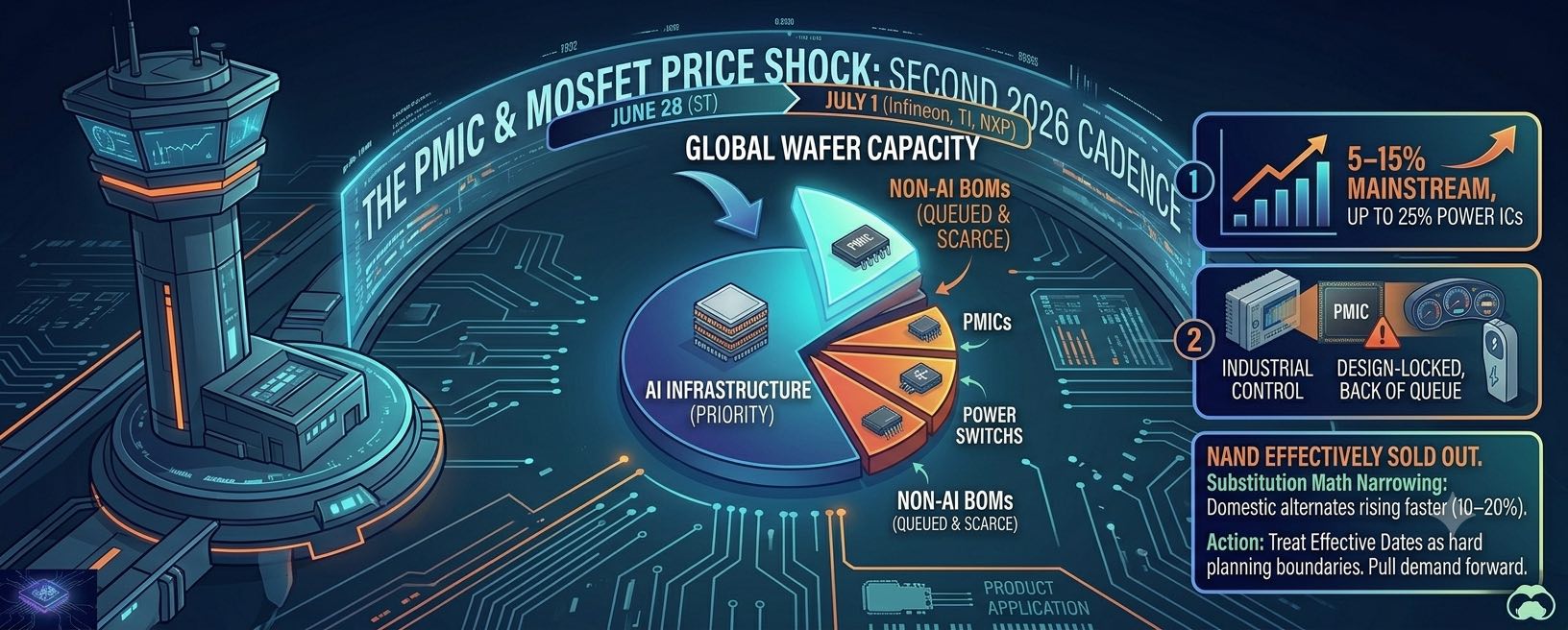
Why the Second 2026 Analog and Power Price Hike Matters More Than the First: Reading the ST, Infineon, TI and NXP Cadence for OEM and EMS Sourcing

June 24, 2026 · By WingCore Editorial

Why the Second 2026 Analog and Power Price Hike Matters More Than the First: Reading the ST, Infineon, TI and NXP Cadence for OEM and EMS Sourcing

A cluster of analog and power leaders is putting a second 2026 price increase into effect within a single week, and the cadence — not the 5%–15% headline — is the real story for procurement teams. This piece reads the signal behind back-to-back hikes from ST, Infineon, TI and NXP, and what OEM and EMS buyers should institutionalize before pricing power settles permanently on the supply side.

marketprocurementsupply-chainai-demand
Read more →
When Enterprise SSD Demand Resets the NAND Hierarchy: What the 2026 Capacity Reallocation Means for OEM and EMS Storage Sourcing

June 22, 2026 · By WingCore Editorial

When Enterprise SSD Demand Resets the NAND Hierarchy: What the 2026 Capacity Reallocation Means for OEM and EMS Storage Sourcing

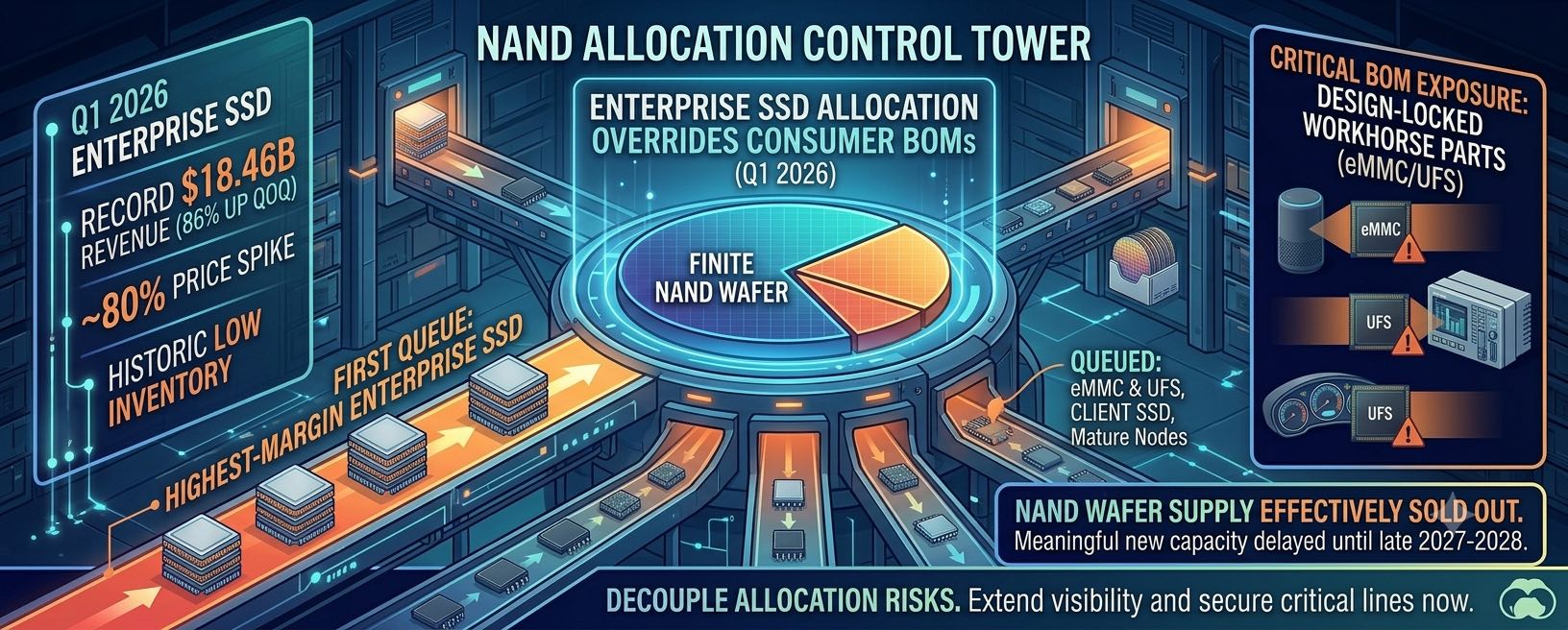
Enterprise SSD revenue reached a record $18.46B in Q1 2026, up 86% QoQ, while contract prices rose roughly 80% in a single quarter and supplier inventories fell to historic lows. As memory makers reallocate wafer capacity toward high-margin AI storage, the pressure is no longer contained to HBM and high-end DRAM — it is now reshaping the availability and cost of general-purpose NAND, client SSDs, eMMC and UFS. This piece examines what the reallocation means structurally for OEM and EMS buyers, and how sourcing strategy should adapt.

memoryai-demandprocurement2026-q2
Read more →
Micron's June 24 Print Is a Read-Through, Not Just an Earnings Event: What the HBM Supercycle Test Means for OEM and EMS Memory Sourcing

June 19, 2026 · By WingCore Editorial

Micron's June 24 Print Is a Read-Through, Not Just an Earnings Event: What the HBM Supercycle Test Means for OEM and EMS Memory Sourcing

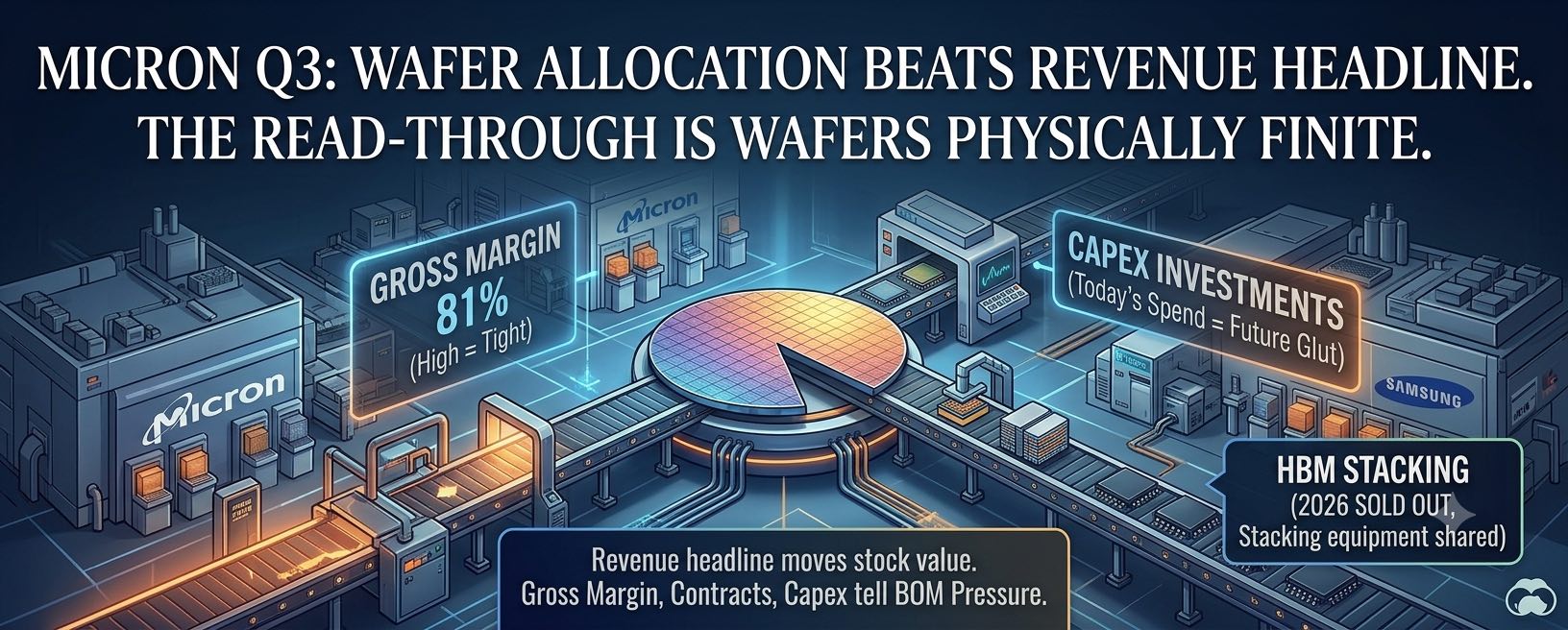
On June 24, Micron reports fiscal Q3 into one of the widest analyst spreads of the year. For procurement teams, the value of this release is not the stock reaction but the read-through it offers on whether memory makers keep diverting capacity into HBM. This piece breaks down the three signals that matter — gross margin, multi-year contract visibility, and capex — and how each maps to mainstream DRAM and NAND availability through the rest of 2026.

memoryai-demandmarketsupply-risk
Read more →
The Two-Speed Semiconductor Market of 2026: Why MCU Allocation and Analog Loosening Demand Two Different Sourcing Playbooks

June 17, 2026 · By WingCore Editorial

The Two-Speed Semiconductor Market of 2026: Why MCU Allocation and Analog Loosening Demand Two Different Sourcing Playbooks

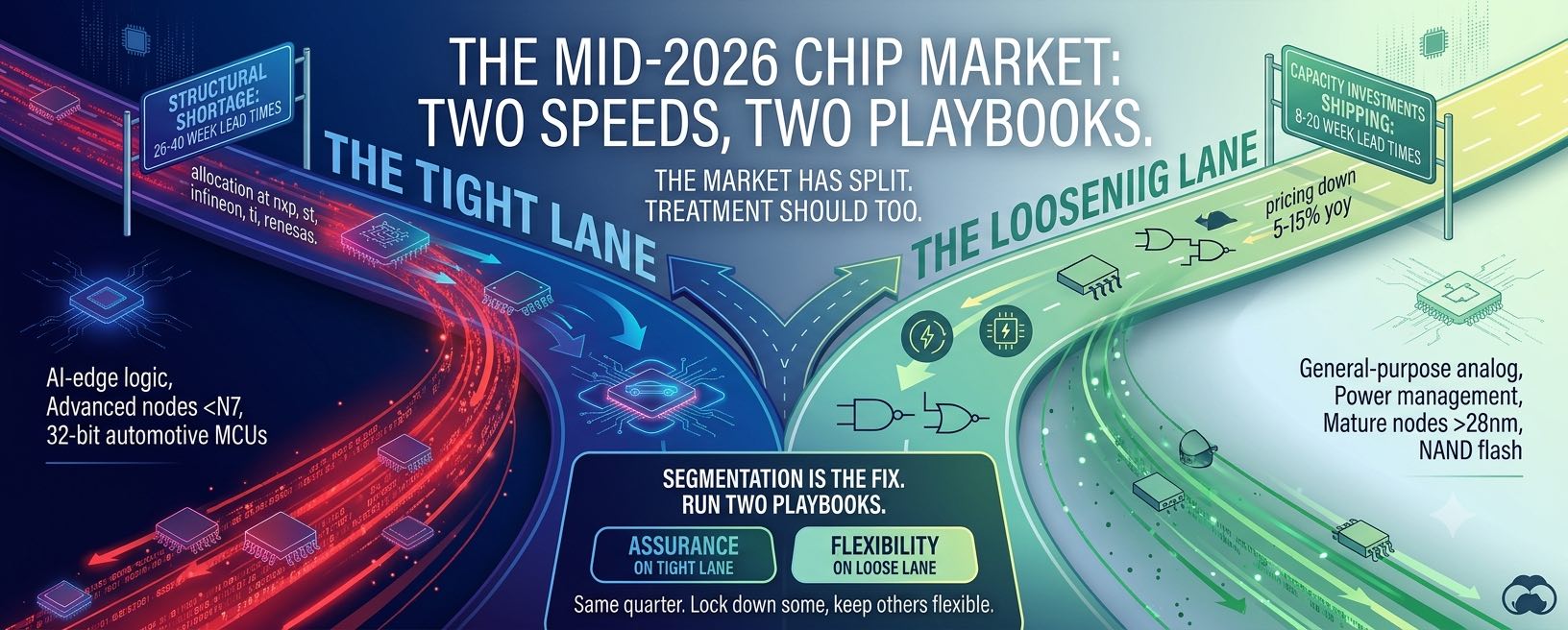
The 2026 component market has bifurcated into a tight lane — AI-edge logic and automotive/industrial MCUs locked at 26–40 week lead times — and a loosening lane where analog, discretes, mature-node logic and NAND are softening in both availability and price. OEM and EMS buyers still running a single shortage-era playbook are mispricing risk on both sides. This is a structural read on why the split exists and what differentiated sourcing looks like.

marketprocurementindustrialsupply-chain
Read more →
When EOL Logic Inverts: Why DDR4 Trading Above DDR5 Should Reshape OEM and EMS Memory Sourcing

June 15, 2026 · By WingCore Editorial

When EOL Logic Inverts: Why DDR4 Trading Above DDR5 Should Reshape OEM and EMS Memory Sourcing

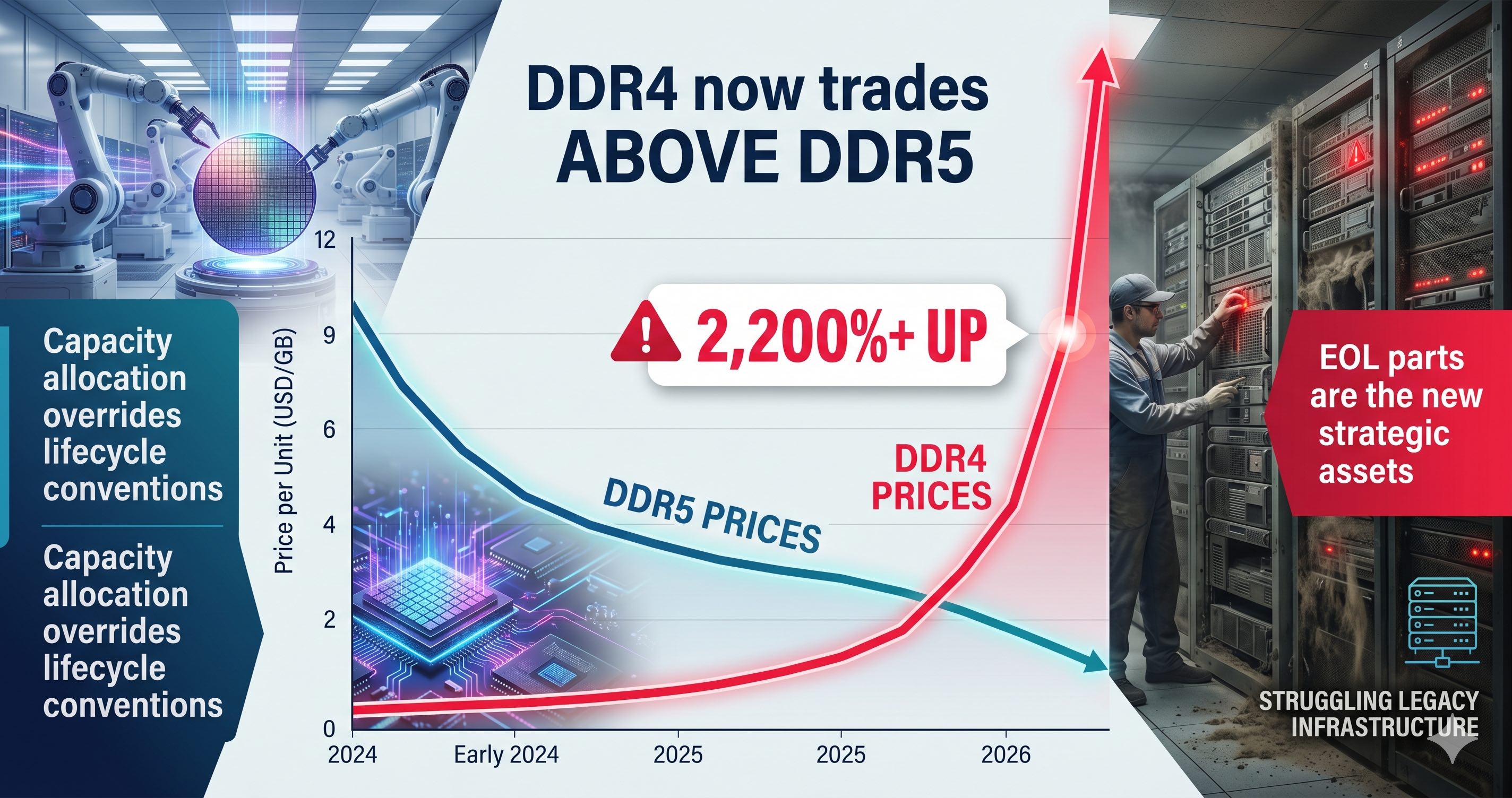
A price inversion in which a legacy memory generation costs more than its successor is not a quirk — it is a signal about how capacity allocation now overrides product-lifecycle convention. For OEM and EMS buyers, DDR4 trading above DDR5 reframes how end-of-life parts should be planned, costed and governed across the BOM.

memorysupply-riskprocurement2026-q2
Read more →
The Next HBM-Style Squeeze Is in Passives: Why AI-Server MLCC Demand Is Crowding Out General-Purpose Capacitors and Reshaping OEM and EMS Sourcing

June 12, 2026 · By WingCore Editorial

The Next HBM-Style Squeeze Is in Passives: Why AI-Server MLCC Demand Is Crowding Out General-Purpose Capacitors and Reshaping OEM and EMS Sourcing

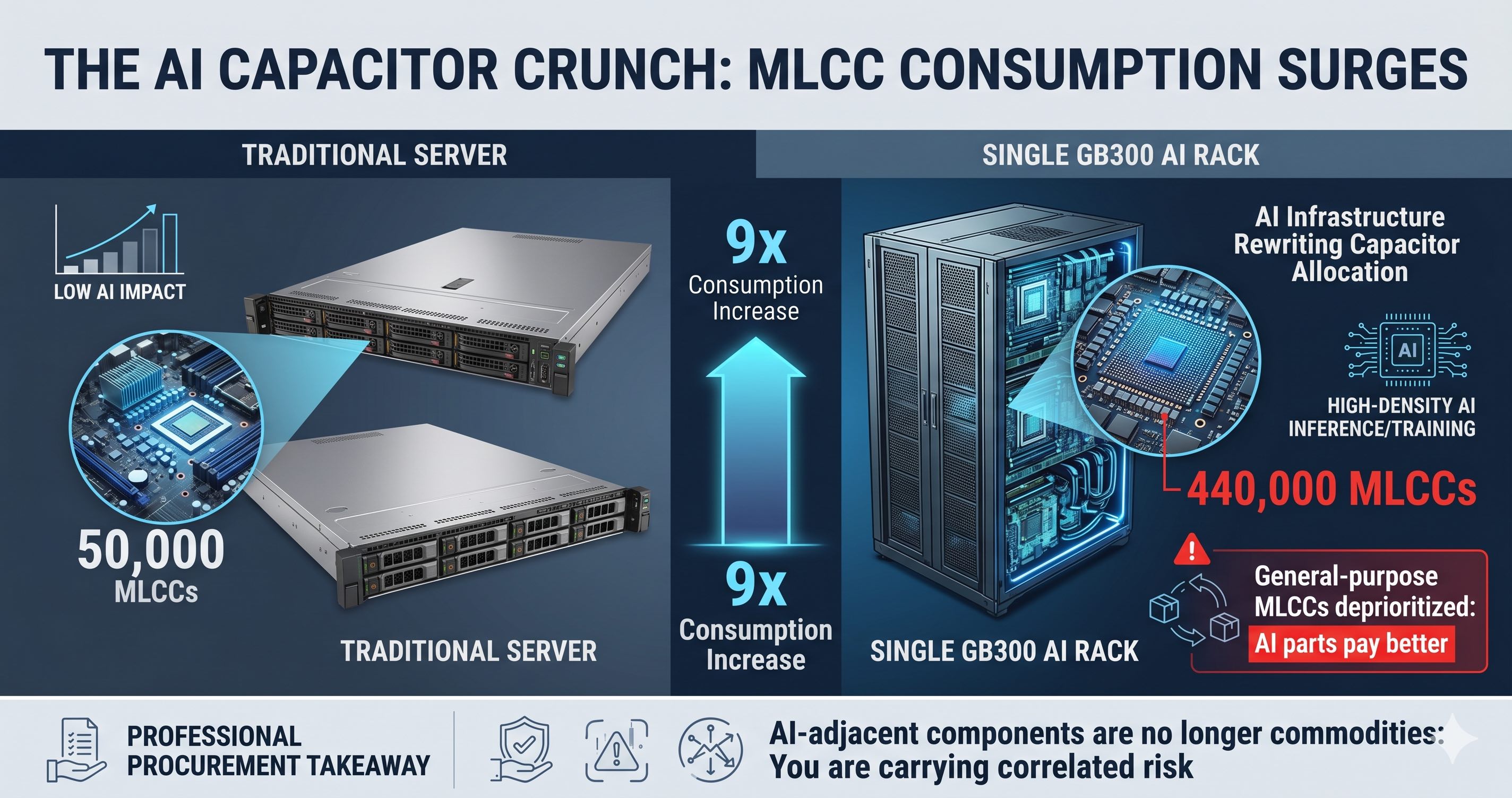
The component market has spent two years watching AI accelerators vacuum up HBM and DRAM capacity. The same dynamic is now playing out in multilayer ceramic capacitors, where a single AI rack can consume nearly nine times the MLCCs of a traditional server. The consequence for OEM and EMS buyers is not just higher prices on premium parts — it is the quiet erosion of allocation for the general-purpose and industrial MLCCs that fill ordinary bills of materials. This piece examines what that means for sourcing strategy through the second half of 2026.

marketai-demandprocurement2026-q2
Read more →
The Nexperia Discrete Disruption Is a Structural Lesson, Not a One-Off: What OEM and EMS Buyers Should Institutionalize Before the Next Single-Node Failure

June 10, 2026 · By WingCore Editorial

The Nexperia Discrete Disruption Is a Structural Lesson, Not a One-Off: What OEM and EMS Buyers Should Institutionalize Before the Next Single-Node Failure

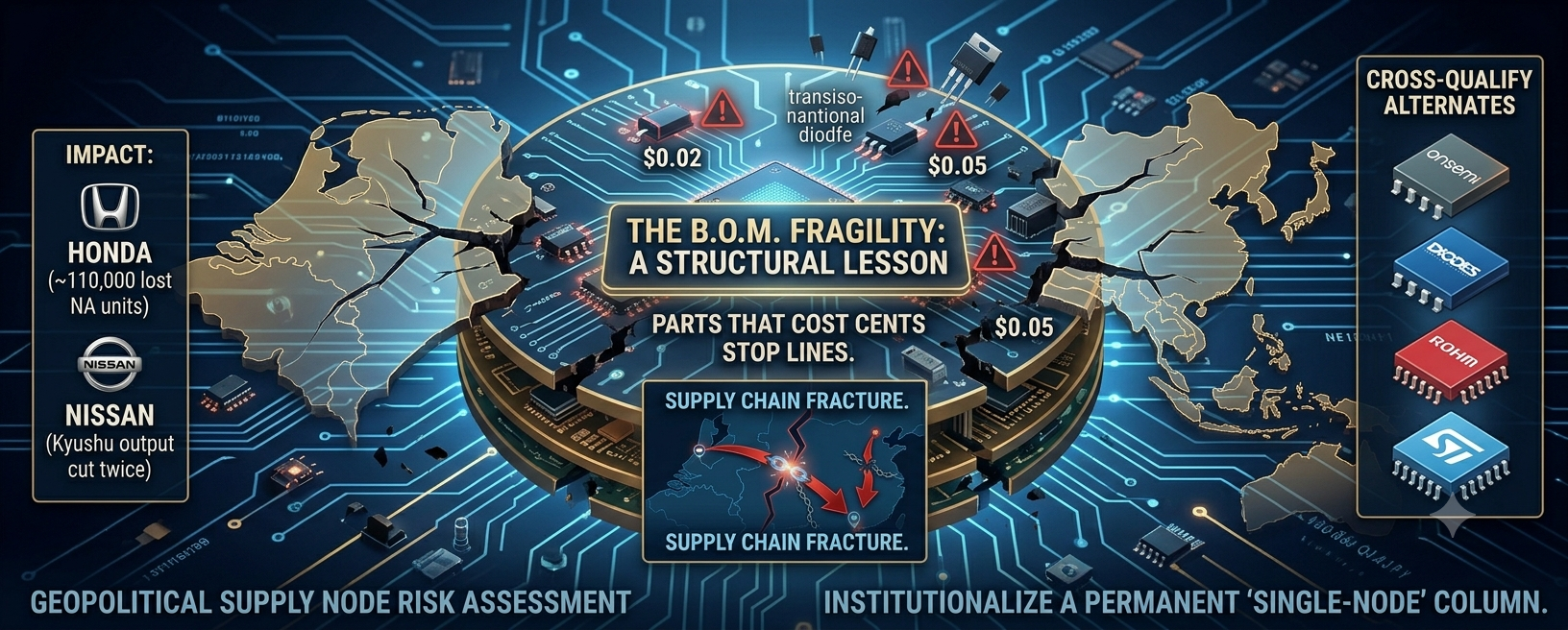
Nexperia's supply disruption has dragged from late September 2025 into mid-2026, with some legacy parts now quoted as unavailable until July 2026 or later. The headline is automotive pain, but the deeper lesson is structural: a single geopolitically exposed assembly-and-test node can sever a billion-dollar discrete supply with no warning. This is a strategic read for OEM and EMS sourcing teams on how to harden BOMs against single-node failure.

supply-riskprocurementsupply-chain2026-q2
Read more →
Helium Becomes the Quiet Single Point of Failure in the 2026 Memory Supply Chain — A Sourcing Read for OEM and EMS Buyers

June 8, 2026 · By WingCore Editorial

Helium Becomes the Quiet Single Point of Failure in the 2026 Memory Supply Chain — A Sourcing Read for OEM and EMS Buyers

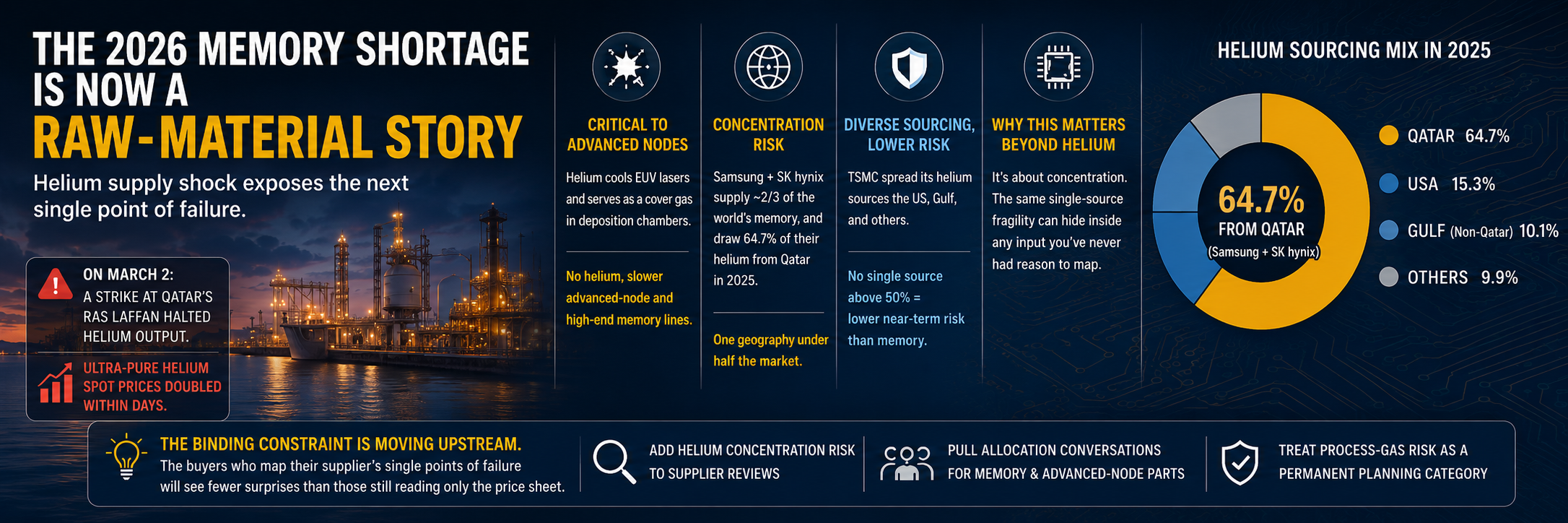
The 2026 memory squeeze has been told almost entirely as a pricing and allocation story. This week reframed it as a raw-material risk. A strike on Qatar's Ras Laffan halted helium output, doubled spot prices, and forced Korean memory fabs to ration a gas with no substitute. For OEM and EMS procurement, helium concentration risk is now a line item that deserves the same attention as wafer allocation.

supply-risksupply-chainprocurement2026-q2
Read more →
The Other NAND Crisis: Why SLC, MLC, and Low-Density eMMC Are Disappearing Faster Than the AI Memory Boom Suggests

June 5, 2026 · By WingCore Editorial

The Other NAND Crisis: Why SLC, MLC, and Low-Density eMMC Are Disappearing Faster Than the AI Memory Boom Suggests

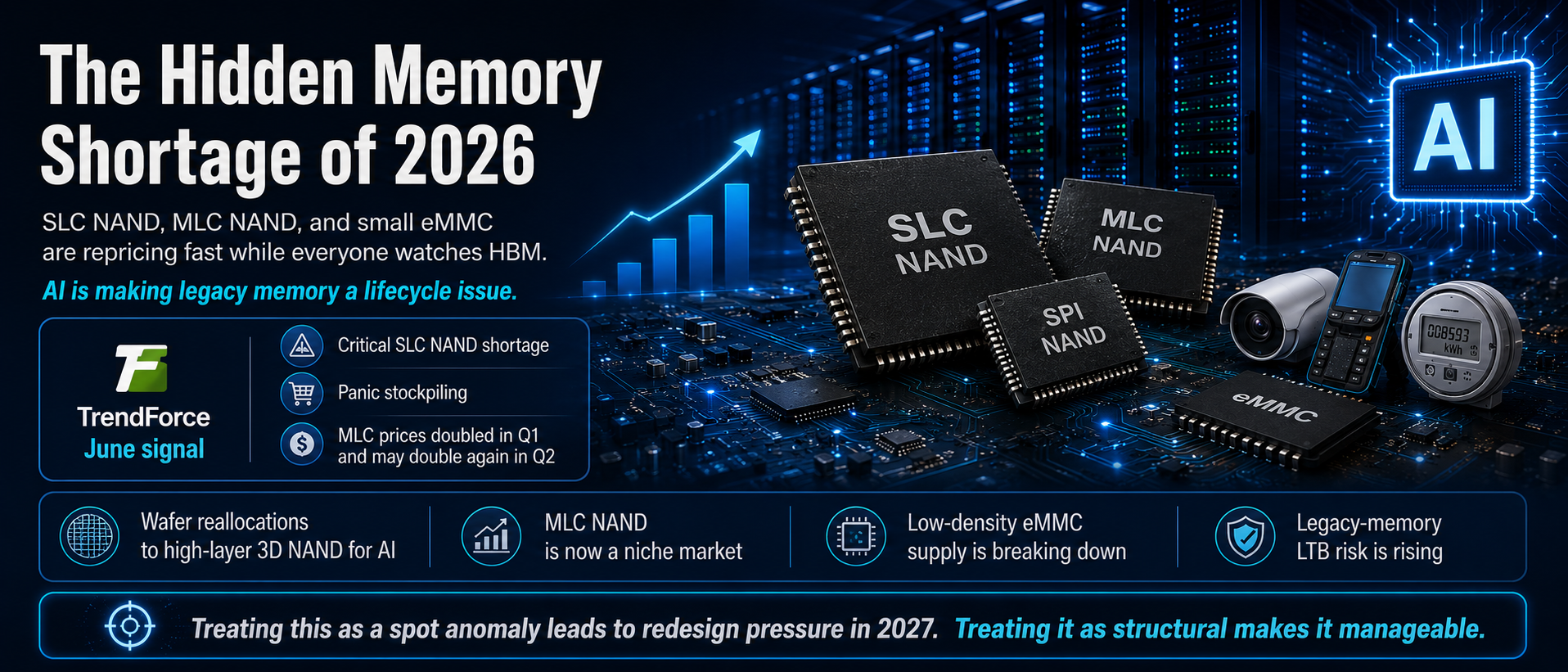
While the industry watches enterprise NAND allocation battles, a quieter crisis is unfolding at the opposite end of the density spectrum. SLC NAND shortages have triggered panic stockpiling, MLC contract prices doubled in Q1 2026 with another doubling possible in Q2, and low-density eMMC supply is breaking down as major manufacturers exit legacy nodes. This analysis examines the structural drivers and what they mean for OEM and EMS sourcing strategy.

memoryeMMCindustrialsupply-risk
Read more →
The SiC Paradox of 2026: Substrate Glut, Device Tightness, and Why the 8-Inch Transition Hands China the Leverage as AI Data Centers Go 800V

June 5, 2026 · By WingCore Editorial

The SiC Paradox of 2026: Substrate Glut, Device Tightness, and Why the 8-Inch Transition Hands China the Leverage as AI Data Centers Go 800V

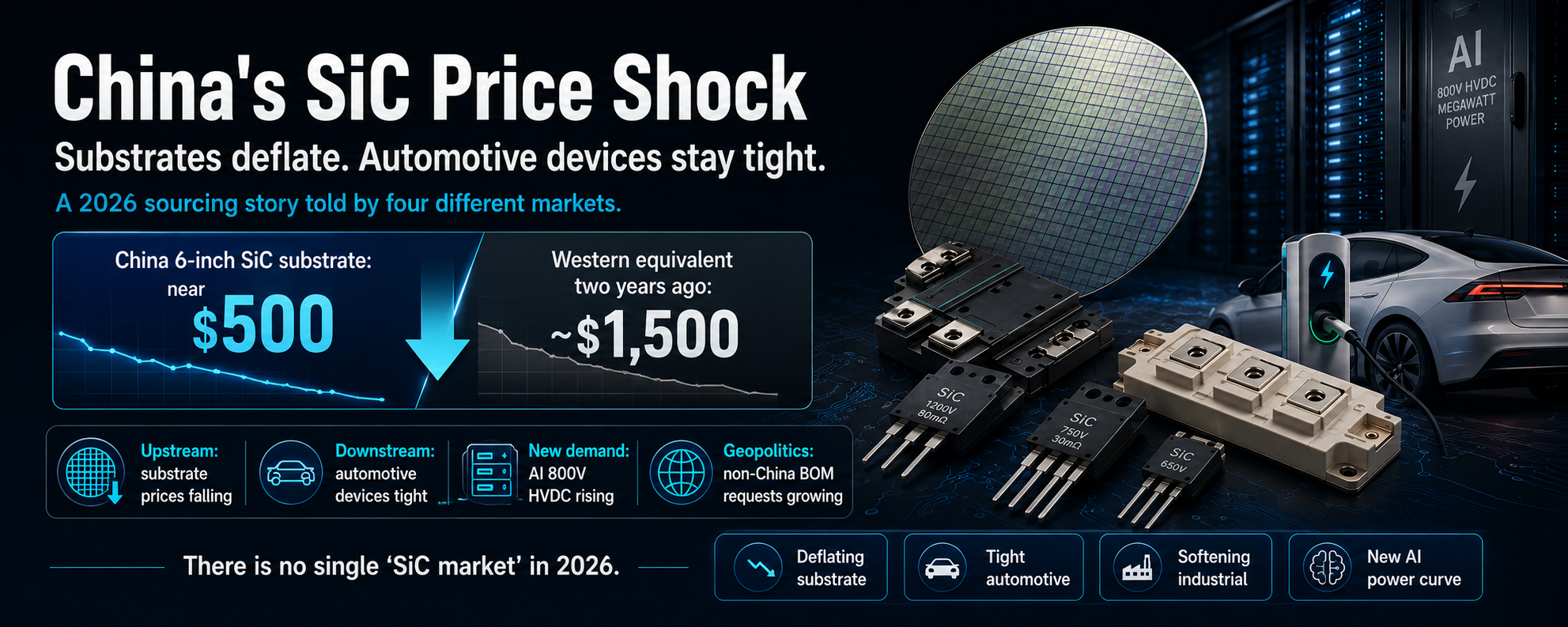
A June 4 DigiTimes exclusive describes China consolidating control of the silicon carbide supply chain as the industry pivots to 8-inch wafers. With Chinese 6-inch substrates quoting near $500 against still-constrained automotive SiC MOSFETs, and 800V HVDC AI data centers emerging as a second demand pillar, OEM and EMS sourcing teams face a market moving in two directions at once. This analysis maps the structural shift and its procurement consequences.

marketai-demandsupply-risksupply-chain
Read more →
Power Semiconductors Become the Second Front of the 2026 Pricing Wave: Reading Infineon's July 1 Hike for OEM and EMS Sourcing Strategy

June 3, 2026 · By WingCore Editorial

Power Semiconductors Become the Second Front of the 2026 Pricing Wave: Reading Infineon's July 1 Hike for OEM and EMS Sourcing Strategy

For most of the first half of 2026, the procurement conversation lived inside memory — DRAM and NAND allocation, HBM4E samples, DDR5 contract resets. Power semiconductors moved more quietly, but they are now unmistakably the second front of the pricing wave, and the fundamentals beneath them are arguably more durable than the memory cycle. This briefing reads Infineon's July 1 second hike, ST's repricing, and the 52-week SiC bottleneck as a single strategic signal for OEM and EMS buyers.

marketai-demandprocurement2026-q2
Read more →
Samsung's HBM4E Sample Lead Has Already Reshaped 2027 AI Memory Procurement — A Strategic Read for OEM and Hyperscale Buyers

June 1, 2026 · By WingCore Editorial

Samsung's HBM4E Sample Lead Has Already Reshaped 2027 AI Memory Procurement — A Strategic Read for OEM and Hyperscale Buyers

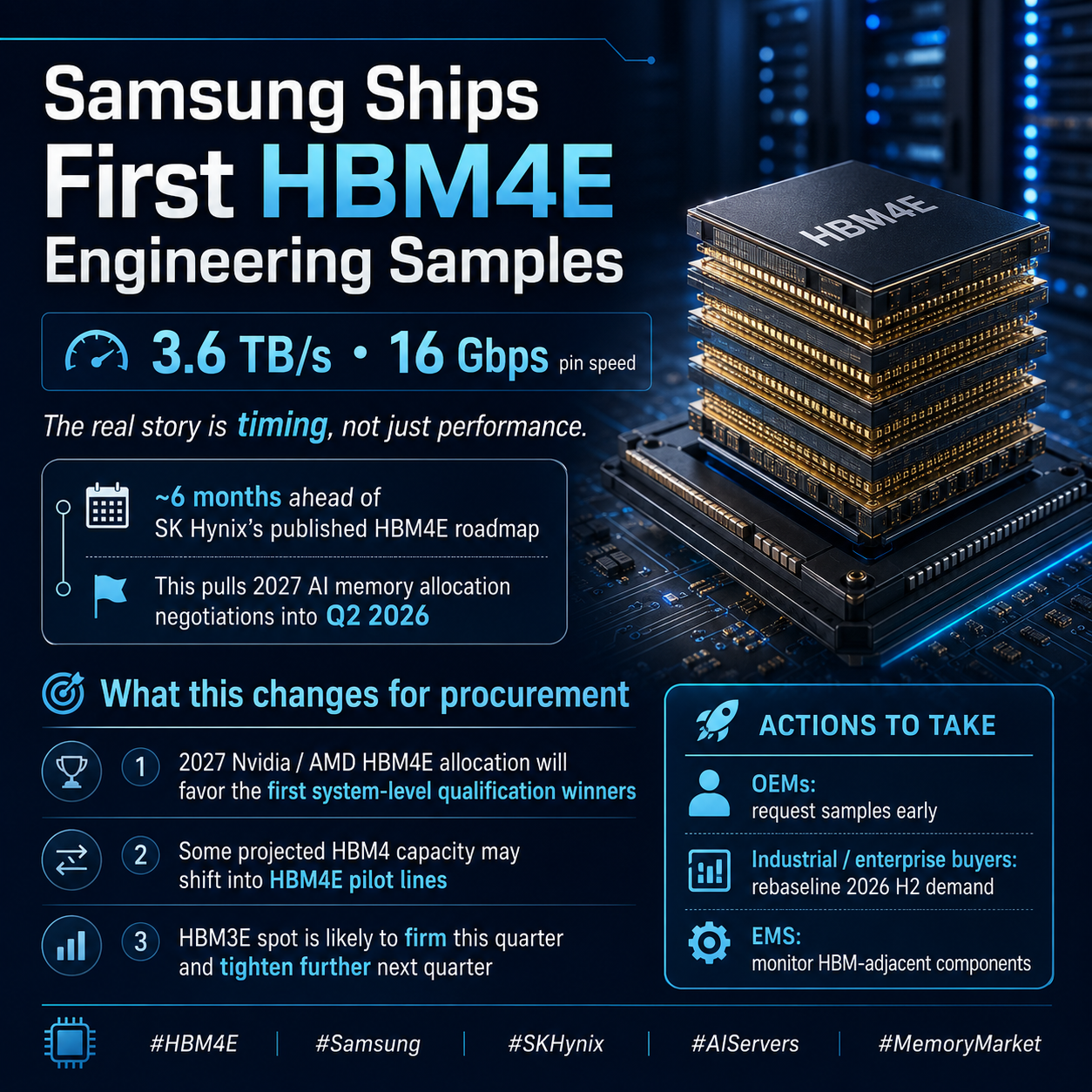
Samsung's May 30 delivery of the industry's first HBM4E engineering samples — at 3.6 TB/s and 16 Gbps pin speed — is being reported as a performance milestone. For OEM, EMS, and hyperscale procurement teams, the substantive impact is different. It pulls the 2027 HBM allocation negotiation cycle into Q2 2026, redistributes 2026 H2 HBM4 capacity assumptions, and forces buyers to revisit second-source qualification timelines that had been comfortably parked. This briefing outlines what changes and why the response window is narrower than it appears.

memoryai-demandsamsungsupply-chain
Read more →
From Pricing Cycle to Allocation Reality: How Kioxia's 2026 Sell-Out, 332-Layer QLC, and 245TB SSDs Reshape Industrial and AI Storage Procurement

May 29, 2026 · By WingCore Editorial

From Pricing Cycle to Allocation Reality: How Kioxia's 2026 Sell-Out, 332-Layer QLC, and 245TB SSDs Reshape Industrial and AI Storage Procurement

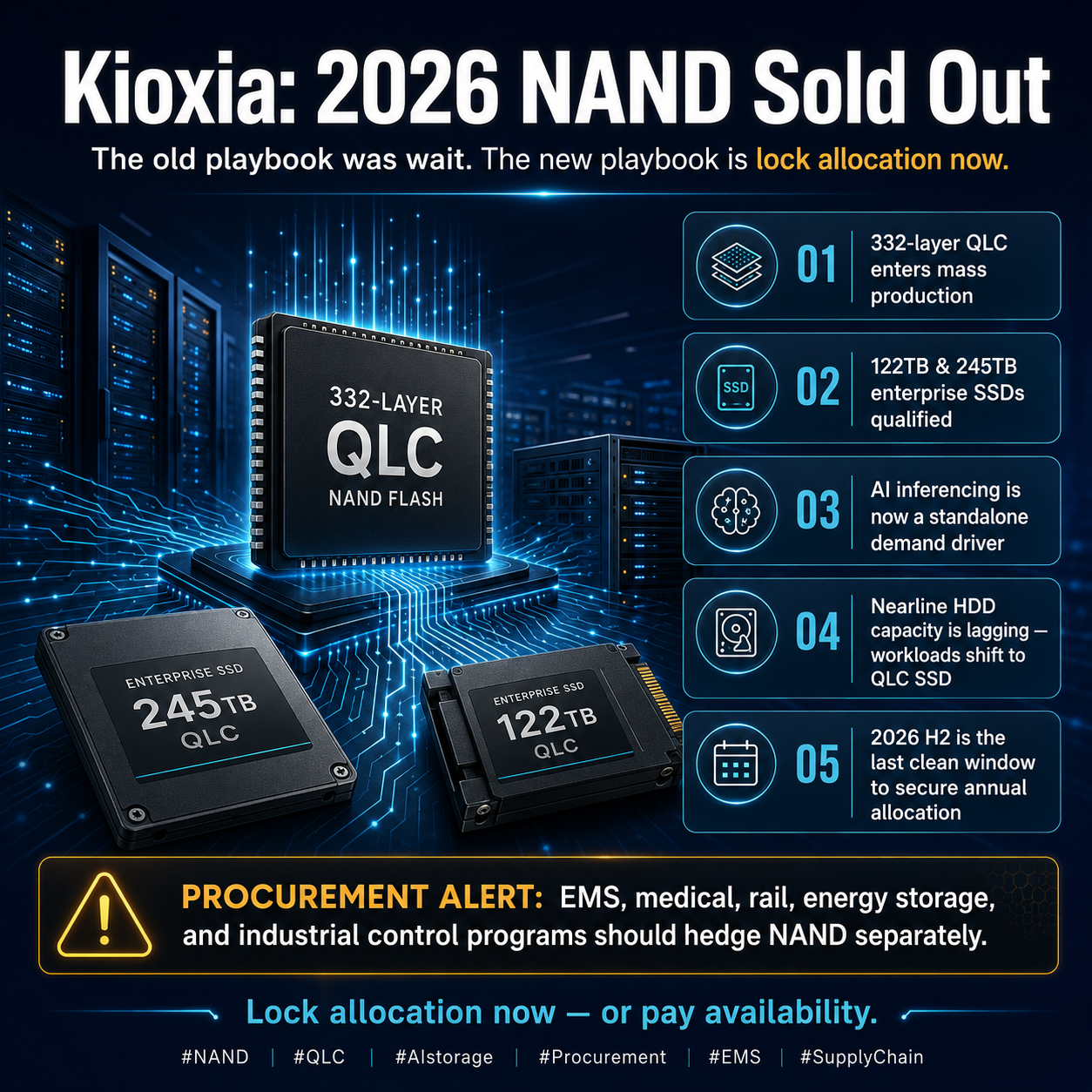
Kioxia's public acknowledgment that calendar 2026 NAND production is fully allocated is not just another supply headline. Combined with the 332-layer QLC ramp and the qualification of 122TB and 245TB enterprise SSDs, it signals a structural shift in how the storage tier will be built for AI inferencing and how nearline HDD workloads migrate to SSD. Industrial OEMs and EMS buyers should treat 2026 H2 as the last clean planning window before allocation becomes the dominant scarcity, not price.

memoryai-demandsupply-risksupply-chain
Read more →
Why the 2026 MLCC Crunch Will Outlast the AI Memory Cycle: An Industrial OEM and EMS Procurement Briefing on 1206/1210 High-Capacitance Supply

May 28, 2026 · By WingCore Editorial

Why the 2026 MLCC Crunch Will Outlast the AI Memory Cycle: An Industrial OEM and EMS Procurement Briefing on 1206/1210 High-Capacitance Supply

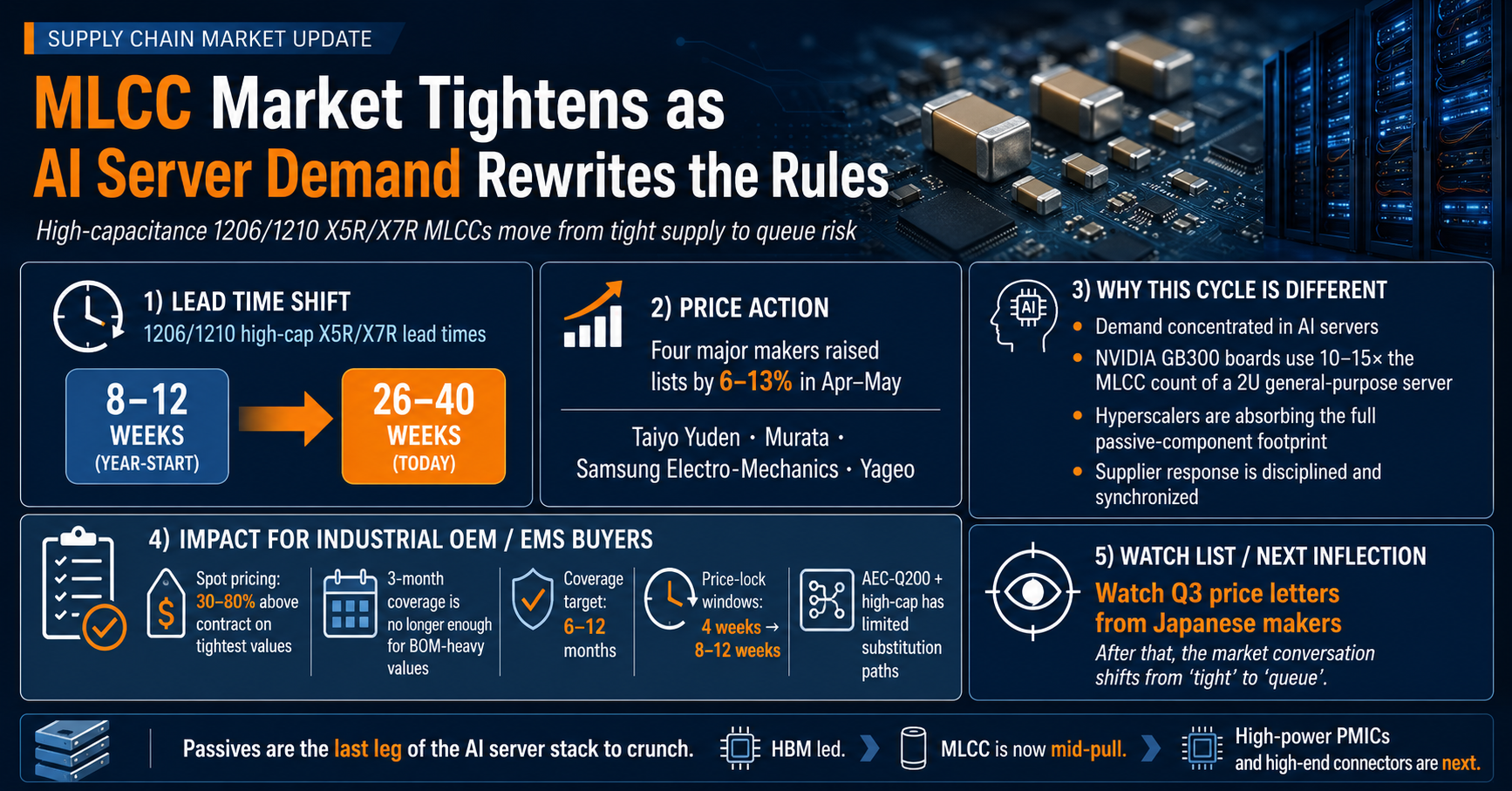
The 2026 multilayer ceramic capacitor cycle is structurally different from 2017-2018. AI server boards now consume MLCCs at 10-15x the rate of general-purpose servers, and four major makers have responded with coordinated 6-13% list increases that pushed 1206/1210 high-capacitance lead times from 8-12 weeks to 26-40 weeks. For industrial OEMs and EMS buyers, this is not a temporary spike but a multi-year repricing of an entire passive-component class. This briefing walks through what is driving the squeeze, where the substitution paths still work, and how procurement teams should restructure their MLCC sourcing posture for 2026 H2 and 2027.

marketprocurementsupply-chainai-demand
Read more →
DDR5 Pricing Resets and 2026 Allocation Lockout: What Industrial OEM and EMS Buyers Need to Reprice Now

May 27, 2026 · By WingCore Editorial

DDR5 Pricing Resets and 2026 Allocation Lockout: What Industrial OEM and EMS Buyers Need to Reprice Now

Samsung's near-60% DDR5 contract price reset and SK hynix's admission that 2026 HBM, DRAM and NAND capacity is essentially sold out mark the moment commodity memory pricing detaches from prior baselines. For industrial OEM, EMS and ODM buyers, the immediate exposure sits in DDR5, LPDDR5, eMMC and LPDDR4 — not in HBM. This is a structural reset, and the response window is the next quarter.

marketmemoryai-demandprocurement
Read more →
The Same-Year Second MCU Pricing Wave: What TI's July 1 And NXP's June 1 Tell Industrial And Automotive Buyers About 2026 H2

May 26, 2026 · By WingCore Editorial

The Same-Year Second MCU Pricing Wave: What TI's July 1 And NXP's June 1 Tell Industrial And Automotive Buyers About 2026 H2

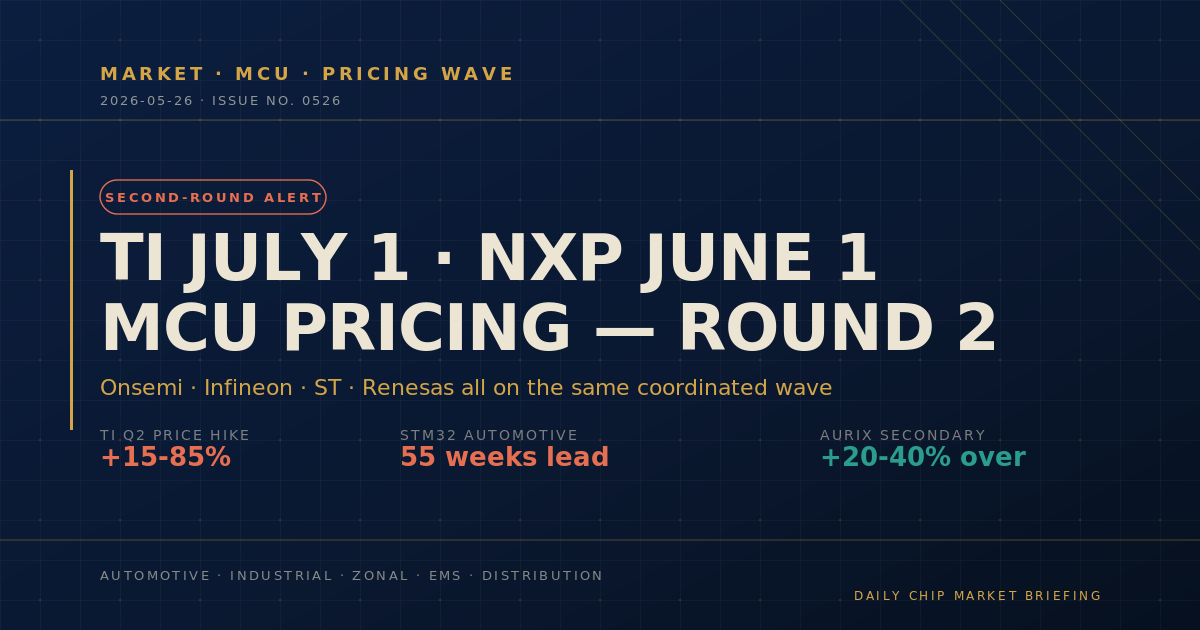
TI's July 1 second-round price increase and NXP's June 1 follow-up are not isolated supplier moves. They are the clearest signal yet that legacy-process MCU pricing has moved from annual contracts to rolling cost-plus, and that industrial and automotive procurement organisations need to restructure how they plan budgets and place safety orders through 2026 H2. This is a buyer-side analysis of the pricing mechanics, the lead-time exposure, and what disciplined sourcing teams should be planning today.

marketprocurement2026-q2industrial
Read more →
Samsung Confirms LPDDR4 and LPDDR4X End-of-Life: The Quiet Forced Migration for Industrial and Long-Lifecycle Products

May 25, 2026 · By WingCore Editorial

Samsung Confirms LPDDR4 and LPDDR4X End-of-Life: The Quiet Forced Migration for Industrial and Long-Lifecycle Products

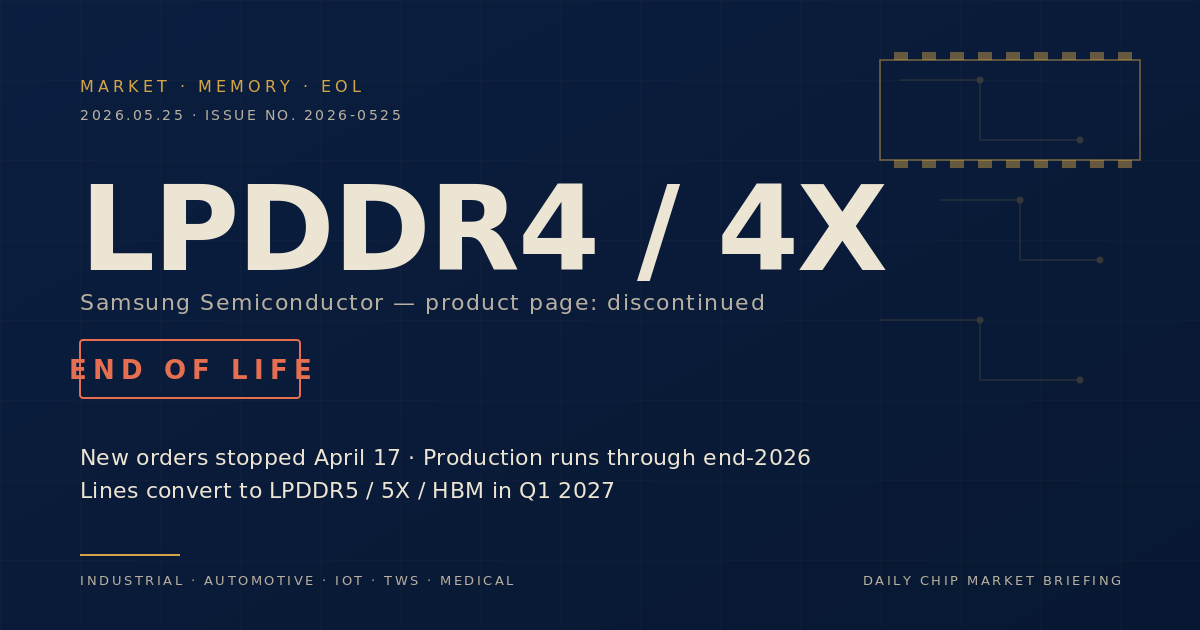
Samsung's product pages now mark LPDDR4 and LPDDR4X as discontinued. New orders have stopped, production runs out by end-2026, and lines fully convert to LPDDR5/5X and HBM in Q1 2027. For mobile SoCs the impact is manageable. For industrial, automotive infotainment, IoT and medical devices — where product lifecycles run 5 to 15 years — this is the start of a difficult forced migration.

memoryLPDDR4samsungsupply-risk
Read more →